



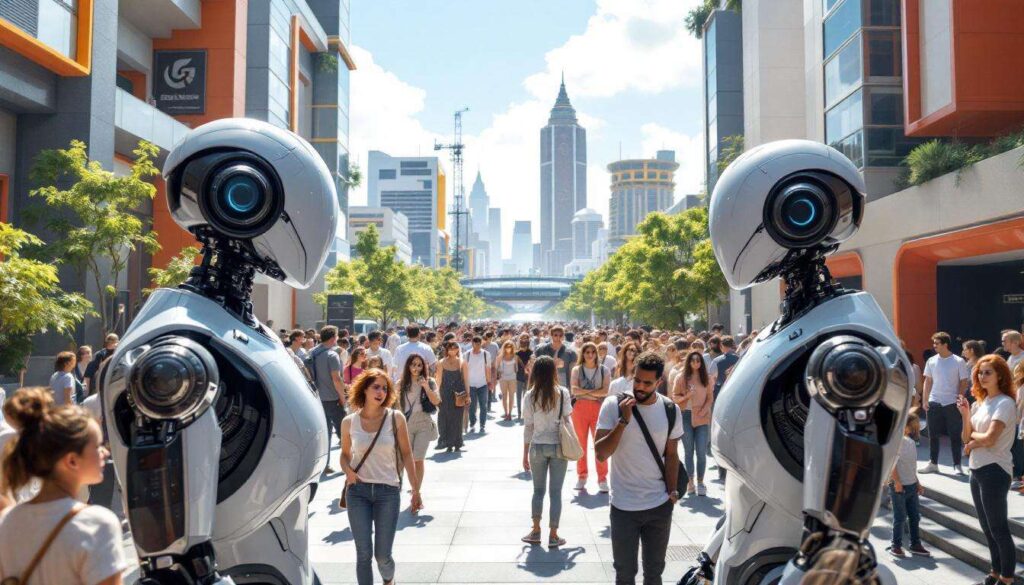
The integration of humanoid robots into everyday life represents one of the most significant technological shifts of our era. As these sophisticated machines become increasingly prevalent in homes, workplaces, and public spaces, questions emerge about their influence on human behaviour and social dynamics. Whilst proponents celebrate the convenience and efficiency these robots offer, researchers and psychologists are beginning to examine a more troubling possibility: that our growing reliance on humanoid robots may fundamentally alter how we relate to one another. The uncanny valley effect, social displacement, and the gradual erosion of interpersonal skills all point towards a future where human connection becomes increasingly mediated by artificial entities.
The evolution of humanoid robots in our society
Humanoid robots have progressed from science fiction fantasies to tangible realities within remarkably few decades. Early prototypes were clumsy and limited in functionality, but contemporary models demonstrate sophisticated artificial intelligence and remarkably lifelike appearances. These machines now serve in diverse capacities, from customer service representatives to care assistants for elderly populations.
The commercial adoption of humanoid robots
Businesses across multiple sectors have embraced humanoid robots for their consistency and cost-effectiveness. Retail environments employ them as greeters and information providers, whilst hospitality venues utilise them for reception duties and room service. The financial incentive is considerable: robots require no salaries, holiday pay, or sick leave. This economic advantage has accelerated their deployment despite concerns about workforce displacement.
| Sector | Primary application | Adoption rate |
|---|---|---|
| Retail | Customer service | 23% |
| Healthcare | Patient care assistance | 18% |
| Hospitality | Reception and concierge | 31% |
| Education | Teaching assistance | 12% |
Domestic integration of robotic companions
The home environment has become another frontier for humanoid robots. These domestic models perform various functions:
- Household management and cleaning tasks
- Companionship for isolated individuals
- Educational support for children
- Monitoring and assistance for vulnerable family members
The convenience factor cannot be understated, yet this integration into private spaces raises questions about the nature of intimacy and family dynamics. As these machines become fixtures in our most personal environments, their influence on social development and emotional intelligence becomes increasingly significant.
This widespread adoption across both public and private spheres sets the stage for examining how these machines affect our psychological wellbeing and interpersonal capabilities.
The psychological impact of humanoid robots on human interactions
The presence of humanoid robots in social settings creates complex psychological effects that researchers are only beginning to understand. These impacts manifest in both immediate reactions and longer-term behavioural changes.
The uncanny valley phenomenon
When robots appear almost, but not quite, human, they trigger an instinctive discomfort known as the uncanny valley effect. This response occurs because our brains detect subtle discrepancies between the robot’s appearance and genuine human characteristics. The resulting unease can manifest as:
- Heightened anxiety in social situations
- Increased self-consciousness about one’s own behaviour
- Difficulty establishing natural conversational rhythms
- Emotional confusion regarding appropriate responses
This psychological discomfort doesn’t simply dissipate with exposure. Instead, it may condition individuals to approach all social interactions with greater caution and suspicion, wondering whether they’re engaging with humans or sophisticated machines.
Social skill atrophy through reduced human contact
Perhaps more concerning than immediate discomfort is the gradual degradation of interpersonal skills. When individuals regularly interact with robots programmed for perfect politeness and predictability, they may lose the capacity to navigate the messy complexity of human relationships. Human interaction requires tolerance for imperfection, the ability to read subtle emotional cues, and skills in conflict resolution. Robots, by contrast, offer frictionless exchanges that demand none of these capabilities.
Children raised alongside humanoid robots face particular vulnerability. Their developing brains require rich social experiences to build empathy, emotional regulation, and communication skills. Substituting robotic interactions for human ones during critical developmental periods could produce a generation less equipped for authentic human connection.
These psychological adaptations to robotic presence naturally lead to questions about whether we can truly trust these artificial entities.
The issue of trust in anthropomorphic technology
Trust forms the foundation of functional societies, yet humanoid robots complicate this fundamental human capacity in unprecedented ways.
Misplaced confidence in artificial entities
Humanoid robots are designed to appear trustworthy through carefully calibrated facial expressions, tone of voice, and body language. This manufactured trustworthiness can be dangerously misleading. Unlike humans, whose trustworthiness develops through demonstrated reliability over time, robots project an illusion of dependability from the first encounter. This creates several problems:
- Users may share sensitive information without appropriate caution
- Individuals might follow robotic advice without critical evaluation
- Children could develop inappropriate trust in non-human entities
- Vulnerable populations may be exploited through manufactured rapport
Erosion of interpersonal trust
Paradoxically, whilst people may trust robots too readily, the presence of these machines in society may simultaneously undermine trust between humans. When individuals become accustomed to the predictability and compliance of robots, they may grow impatient with the unpredictability inherent in human relationships. Real people disappoint, make mistakes, and act inconsistently. These very human qualities, once accepted as normal, may increasingly be viewed as character flaws when compared against robotic perfection.
Furthermore, as robots become more sophisticated, the ability to distinguish them from humans diminishes. This uncertainty breeds suspicion: is the person on the telephone a human or an advanced AI ? Does the individual across the desk possess genuine empathy or programmed responses ? Such doubts corrode the automatic trust that once facilitated social cohesion.
These trust complications raise fundamental questions about what separates humans from their creations.
The boundaries between humanity and robotics
The increasing sophistication of humanoid robots blurs once-clear distinctions between human and machine, creating philosophical and practical challenges.
Defining human uniqueness
Traditional markers of humanity are progressively being replicated by machines. Robots now demonstrate conversational ability, emotional expression, and even creativity. This technological achievement forces uncomfortable questions: what, if anything, makes humans special ? If machines can perform all the functions once considered distinctively human, does humanity retain any unique value ?
This existential uncertainty affects how people view themselves and others. When the boundaries blur, individuals may begin treating humans more like machines, expecting efficiency and consistency rather than accepting the beautiful imperfection that characterises human existence.
The risk of dehumanisation
As society grows comfortable with humanoid robots, a troubling parallel process may occur: the dehumanisation of actual people. Service workers, in particular, face this risk. When customers become accustomed to interacting with unfailingly polite robots, they may extend the same impersonal treatment to human employees, viewing them as interchangeable units rather than individuals worthy of respect and consideration.
This blurring of boundaries carries profound implications for how society structures itself ethically.
The ethical implications of robots in our daily lives
The proliferation of humanoid robots raises ethical questions that society has barely begun to address systematically.
Responsibility and accountability
When humanoid robots make decisions that affect human welfare, determining responsibility becomes complex. If a care robot fails to properly assist an elderly person, who bears accountability ? The manufacturer, the programmer, the purchaser, or the robot itself ? This ambiguity of responsibility creates dangerous gaps in protection for vulnerable populations.
Privacy and surveillance concerns
Humanoid robots equipped with cameras, microphones, and data collection capabilities represent unprecedented surveillance tools. Their presence in homes and public spaces means constant monitoring, with data potentially being collected, stored, and analysed. The ethical implications include:
- Erosion of private spaces free from observation
- Potential for data misuse by corporations or governments
- Normalisation of constant surveillance, particularly for children
- Commodification of intimate personal information
Social inequality and access
The cost of humanoid robots means they remain accessible primarily to affluent individuals and well-funded organisations. This creates a technological divide where the wealthy enjoy robotic assistance whilst others continue relying on increasingly scarce human services. This inequality could exacerbate existing social divisions, creating separate classes with fundamentally different daily experiences.
These ethical challenges shape the landscape in which future human relationships will develop.
The future of human relationships in the age of humanoid robots
Looking forward, the trajectory of humanoid robot integration suggests profound changes to human social structures and individual relationships.
Potential scenarios for social evolution
Several possible futures emerge from current trends. In one scenario, humans increasingly withdraw from direct social contact, preferring the predictable comfort of robotic companionship. This path leads to isolated individuals connected primarily through technology, with face-to-face human interaction becoming rare and anxiety-inducing.
Alternatively, society might develop a renewed appreciation for authentic human connection, treating robots as useful tools whilst consciously preserving spaces for genuine interpersonal relationships. This outcome requires deliberate effort and social policies that prioritise human contact.
Preserving human connection
Maintaining meaningful human relationships in an increasingly robotic world demands intentional action:
- Educational programmes emphasising social-emotional learning
- Designated technology-free spaces for human interaction
- Regulatory frameworks limiting robot deployment in sensitive contexts
- Cultural movements celebrating human imperfection and authenticity
The choices made now will determine whether humanoid robots enhance human flourishing or contribute to social fragmentation and emotional isolation.
The rise of humanoid robots presents society with a critical juncture. Whilst these machines offer undeniable practical benefits, their psychological and social costs deserve serious consideration. The uncanny valley effect, erosion of interpersonal skills, complicated trust dynamics, blurred boundaries between human and machine, and significant ethical challenges all suggest that increased comfort with robots may correlate with decreased comfort in human relationships. Preserving the richness of human connection requires acknowledging these risks and taking deliberate steps to maintain spaces where authentic, messy, imperfect human interaction can flourish. The future depends not on rejecting technological progress, but on ensuring that progress serves humanity rather than diminishing what makes us human.