



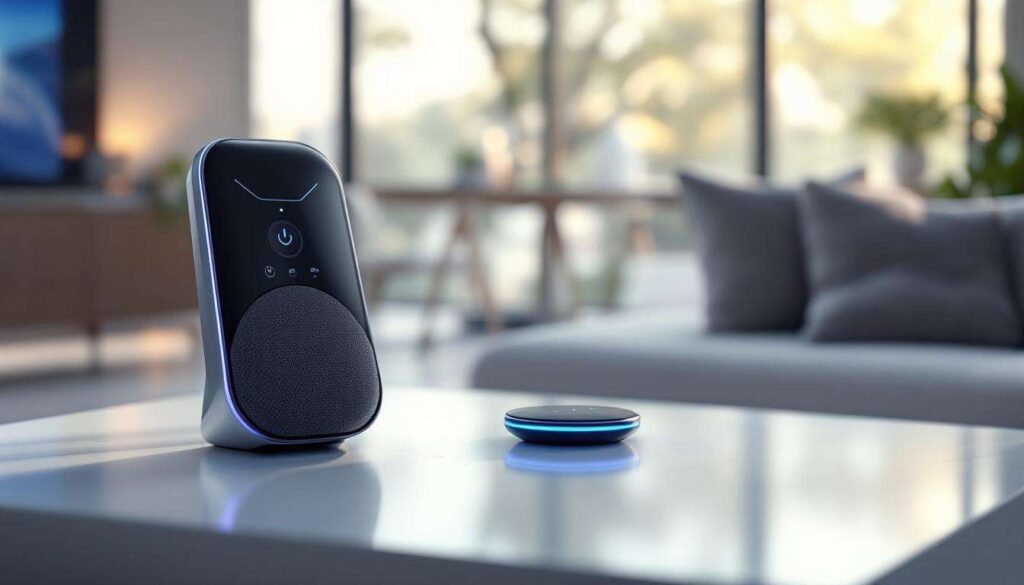
The consumer technology landscape has witnessed numerous ambitious products promising revolutionary changes to daily life. Recent years brought forth devices like the Rabbit R1 and Humane Pin, gadgets that generated substantial pre-launch excitement before disappointing users with underwhelming performance and questionable utility. These failures seemed to represent the nadir of overhyped tech releases, yet the industry continues to demonstrate an uncanny ability to produce even more perplexing innovations that challenge our understanding of product development and market readiness.
The surprising technological evolution
Acceleration beyond comprehension
Technology advancement has reached velocities that frequently outpace both regulatory frameworks and consumer comprehension. The rush to market with artificial intelligence-powered devices exemplifies this phenomenon, where manufacturers prioritise being first over being functional. This acceleration creates a peculiar ecosystem where products launch with fundamental flaws that would have been inconceivable in previous decades.
The contemporary tech industry operates under principles that seem counterintuitive to traditional product development:
- Launch first, refine later through software updates
- Generate hype through ambitious promises rather than proven capabilities
- Rely on early adopters as unpaid beta testers
- Pivot business models when initial concepts fail
- Prioritise investor confidence over consumer satisfaction
The venture capital influence
Financial backing from venture capital firms has fundamentally altered how technology products reach consumers. Companies secure substantial funding based on potential rather than performance, creating pressure to deliver visible products regardless of readiness. This dynamic encourages theatrical product launches that prioritise spectacle over substance, with marketing budgets often dwarfing research and development expenditure.
| Traditional Development | Modern Tech Approach |
|---|---|
| Extensive testing phase | Public beta as standard release |
| Feature completeness at launch | Roadmap promises for future updates |
| Conservative marketing claims | Aspirational messaging |
| Profitability focus | Market share priority |
This financial structure explains why seemingly half-baked products continue emerging despite previous failures serving as cautionary tales.
Rabbit R1 and the Humane Pin: the beginnings
Promise versus reality
The Rabbit R1 arrived with considerable fanfare, positioning itself as an AI companion device that would streamline digital interactions. Its creators envisioned a pocket-sized assistant capable of handling tasks across multiple applications through natural language commands. The Humane Pin pursued similar ambitions, marketing itself as a screenless wearable AI device that would liberate users from smartphone dependency through projection technology and voice interaction.
Both devices shared common characteristics that initially attracted attention:
- Novel form factors distinct from smartphones
- Heavy reliance on artificial intelligence capabilities
- Premium pricing suggesting sophisticated technology
- Celebrity endorsements and influential backers
- Promises to revolutionise human-computer interaction
The critical reception
Reviews exposed significant gaps between marketing promises and actual functionality. The Rabbit R1 struggled with basic task execution, frequently misunderstanding commands and failing to complete straightforward requests. Its limited application integration meant users still required smartphones for most activities, negating the device’s fundamental premise.
The Humane Pin faced even harsher criticism. Its projection system proved barely visible in normal lighting conditions, the battery life disappointed, and the subscription model seemed unjustifiable given the limited capabilities. Reviewers questioned whether either product had undergone adequate real-world testing before launch, with some suggesting they felt more like expensive tech demos than finished consumer products.
These disappointing debuts established a benchmark for technological missteps, yet they represented merely the beginning of an ongoing trend.
The unexpected impact of deceptive gadgets
Consumer trust erosion
Failed product launches create ripple effects extending far beyond immediate financial losses. When devices like the Rabbit R1 and Humane Pin underdeliver, they contribute to growing consumer scepticism towards emerging technology categories. This erosion of trust affects not only the companies responsible but entire sectors attempting to establish new product paradigms.
The consequences manifest in several ways:
- Increased hesitation towards pre-ordering new technology
- Greater reliance on post-launch reviews before purchasing
- Diminished effectiveness of marketing campaigns
- Reduced willingness to adopt novel device categories
- Higher expectations for proof-of-concept demonstrations
Industry-wide implications
These failures influence how legitimate innovations are received. Companies developing genuinely useful products face heightened scrutiny and scepticism because consumers have been burned repeatedly. The market becomes increasingly difficult for startups without extensive resources to demonstrate credibility through prolonged testing periods and transparent development processes.
| Impact Area | Effect |
|---|---|
| Investment climate | More cautious funding decisions |
| Media coverage | Increased critical analysis |
| Consumer behaviour | Wait-and-see approach |
| Competitor strategy | Emphasis on proven technology |
This climate of suspicion creates barriers for innovation whilst simultaneously failing to prevent poorly conceived products from reaching market, suggesting deeper systemic issues.
When digital surpasses understanding
Complexity without clarity
Modern technology increasingly operates through processes that remain opaque even to educated consumers. Artificial intelligence systems particularly exemplify this opacity, making decisions through neural networks that their own creators cannot fully explain. This complexity enables companies to market products with vague capabilities, relying on consumer confusion to mask fundamental limitations.
The knowledge gap between manufacturers and users has widened considerably:
- Technical specifications become meaningless to average consumers
- Marketing language exploits misunderstanding of terms like “AI” and “machine learning”
- Product capabilities are described aspirationally rather than factually
- Limitations are obscured through careful wording
- Comparison between products becomes nearly impossible
The illusion of intelligence
Many recent devices leverage the mystique surrounding artificial intelligence to suggest capabilities they do not possess. Consumers often cannot distinguish between genuine AI functionality and simple automation with clever branding. This ambiguity allows products to launch with fundamental deficiencies whilst maintaining plausible deniability about what was actually promised.
The situation worsens as technology becomes more integrated into daily life, with users increasingly dependent on systems they cannot evaluate or understand, creating vulnerability to exploitation.
Reevaluating our trust in technology
Critical consumption
The pattern of disappointing releases necessitates a fundamental shift in how consumers approach new technology. Healthy scepticism should replace the enthusiasm that previously greeted innovative products. This does not mean rejecting advancement but rather demanding evidence of functionality before investment.
Practical approaches to technology evaluation include:
- Waiting for independent third-party reviews before purchasing
- Researching company track records and previous product performance
- Questioning marketing claims that seem extraordinary
- Understanding return policies and warranty terms
- Seeking detailed technical specifications rather than promotional materials
- Consulting user communities for real-world experiences
Regulatory considerations
The frequency of underwhelming product launches raises questions about whether existing consumer protection frameworks adequately address modern technology. Traditional regulations focused on physical product safety and basic functionality may not translate effectively to software-dependent devices that can change dramatically post-purchase through updates.
| Protection Gap | Current Challenge |
|---|---|
| Performance claims | Vague AI capability descriptions |
| Post-sale changes | Features removed via updates |
| Subscription requirements | Ongoing costs for basic functionality |
| Data practices | Unclear information handling |
Addressing these gaps requires both regulatory evolution and consumer vigilance, creating pressure for industry accountability.
The uncertain future of technological innovations
Learning from failure
Despite repeated disappointments, the technology industry shows limited evidence of learning from past mistakes. New products continue launching with similar flaws, suggesting systemic issues rather than isolated incidents. The financial incentives favouring rapid development and market entry outweigh concerns about product readiness or consumer satisfaction.
However, some positive indicators suggest potential improvement:
- Increased media scrutiny of pre-launch claims
- Growing consumer resistance to unproven products
- More rigorous investor due diligence following high-profile failures
- Greater emphasis on sustainable business models over growth-at-any-cost
Navigating what comes next
The trajectory of consumer technology remains unpredictable. While genuinely transformative innovations will undoubtedly emerge, they will arrive alongside numerous half-baked concepts and overhyped gadgets. Distinguishing between the two requires informed consumers willing to resist marketing pressure and demand accountability.
The industry’s capacity for producing surprising disappointments appears limitless, suggesting that the Rabbit R1 and Humane Pin will not represent the lowest point but rather examples in an ongoing pattern. Understanding this reality helps consumers make better decisions whilst encouraging companies to prioritise substance over spectacle.
The technology sector stands at a crossroads where continued tolerance for underperforming products threatens long-term innovation by exhausting consumer patience and trust. Failures like the Rabbit R1 and Humane Pin serve as reminders that impressive marketing cannot substitute for functional products. Moving forward requires both industry accountability and consumer discernment, recognising that genuine innovation deserves support whilst poorly conceived gadgets merit swift rejection. The balance between embracing progress and maintaining critical evaluation will determine whether future technological developments serve users meaningfully or simply perpetuate cycles of disappointment and wasted resources.