



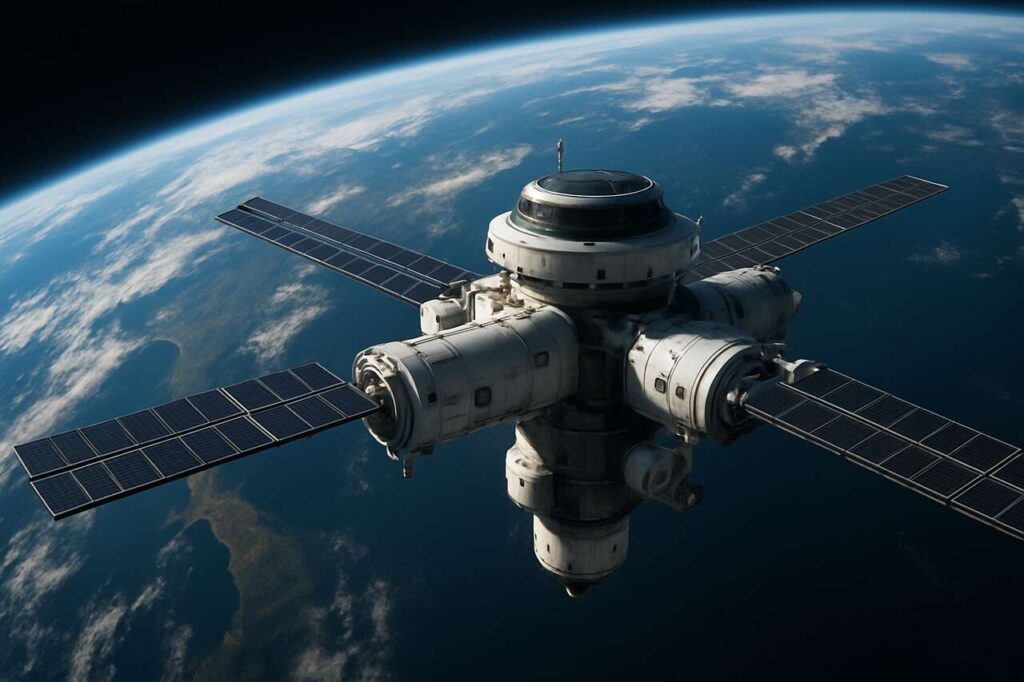
The International Space Station has orbited Earth for over two decades, serving as humanity’s primary outpost beyond our planet. As its operational lifespan draws to a close, questions emerge about what will replace this symbol of international collaboration. With deorbiting planned for the end of the decade, the space industry faces a pivotal moment. Private companies have stepped forward with ambitious proposals to fill the void, but whether commercial ventures can truly replicate the scientific and diplomatic achievements of the ISS remains uncertain.
The scheduled end of the International Space Station
A legacy spanning decades
The ISS has been continuously inhabited since November 2000, representing one of the most successful examples of international cooperation in human history. The station has hosted astronauts from 19 countries and facilitated thousands of scientific experiments in microgravity. However, like all engineering marvels, it has a finite lifespan. NASA and its international partners have confirmed that operations will cease around 2030, with the station scheduled for a controlled deorbit into the Pacific Ocean.
Why retirement is necessary
Several factors necessitate the ISS’s retirement:
- Ageing infrastructure and increasing maintenance costs
- Structural fatigue from decades of exposure to the space environment
- Outdated technology that limits research capabilities
- Rising risk of critical system failures
The station’s modules were designed for a 15-year operational life, and many have exceeded this expectation. Extending operations beyond 2030 would require substantial investment with diminishing returns, making retirement the most practical option.
As the countdown to deorbiting continues, attention turns to the emerging commercial sector and its readiness to assume responsibility for human presence in low Earth orbit.
The rise of private space stations
A new era of commercial spaceflight
The past decade has witnessed remarkable growth in private space capabilities. Companies once dependent on government contracts now develop independent projects, including orbital habitats. NASA has actively encouraged this transition through programmes like Commercial LEO Destinations, which provides funding to private firms developing space station concepts.
Current private station projects
| Company | Project name | Target launch | Capacity |
|---|---|---|---|
| Axiom Space | Axiom Station | 2026 onwards | 8 astronauts |
| Blue Origin | Orbital Reef | Late 2020s | 10 astronauts |
| Northrop Grumman | Commercial station | Under development | 4 astronauts |
These ventures represent a fundamental shift in how humanity accesses space. Rather than government-owned infrastructure, private stations aim to offer services to multiple clients, including national space agencies, research institutions, and commercial customers.
The success of these projects depends heavily on the strategic vision and resources of the companies behind them.
The ambitions of major space companies
Axiom Space’s modular approach
Axiom Space has adopted a pragmatic strategy by initially attaching modules to the existing ISS. This approach allows testing and refinement before the station becomes independent. The company envisions a multipurpose facility serving government astronauts, private researchers, and space tourists. Their modules feature larger windows and more spacious interiors than current ISS compartments.
Blue Origin’s ambitious vision
Blue Origin, founded by Jeff Bezos, has partnered with Sierra Space and Boeing to develop Orbital Reef, marketed as a “mixed-use business park” in space. The station aims to accommodate:
- Scientific research laboratories
- Manufacturing facilities for space-based production
- Media and entertainment ventures
- Tourism and hospitality services
This diversified business model reflects confidence in emerging space markets beyond traditional research applications.
International players entering the field
China operates its own Tiangong space station, while India has announced plans for a modest orbital outpost. These developments suggest that low Earth orbit will become increasingly crowded with national and commercial stations, each serving distinct purposes.
Despite these ambitious plans, significant obstacles must be overcome before private stations become operational realities.
The technical and financial challenges of private stations
Engineering complexities
Designing and operating a space station presents extraordinary technical challenges. Life support systems must function flawlessly for years, radiation shielding requires careful engineering, and docking mechanisms must accommodate various spacecraft. Private companies lack the decades of operational experience that government agencies possess, creating potential safety concerns.
The funding question
Building a space station requires billions of pounds in investment. Key financial considerations include:
- Development and launch costs exceeding £1 billion per project
- Annual operational expenses in the hundreds of millions
- Insurance and liability coverage for crew and customers
- Return on investment timelines spanning decades
Unlike government programmes funded through taxation, private ventures must generate revenue to survive. Whether sufficient demand exists for commercial space services remains unproven.
Regulatory and safety standards
Private stations must meet stringent safety requirements whilst navigating evolving regulatory frameworks. Determining liability for accidents, establishing property rights in orbit, and coordinating traffic management pose legal challenges that governments and companies continue to address.
These practical concerns directly affect the type and quality of research that future stations can support.
Impact on scientific research and space exploration
Continuity of microgravity research
The ISS has enabled groundbreaking research in fields including materials science, biology, medicine, and Earth observation. Private stations must maintain this scientific capability or risk losing decades of accumulated knowledge. Concerns exist that profit-driven operations may prioritise commercial activities over fundamental research.
Access and affordability for researchers
Government-funded stations typically allocate research time based on scientific merit rather than ability to pay. Private operators may charge market rates, potentially excluding universities and smaller nations from conducting experiments. This could create disparities in scientific access that undermine the collaborative spirit that has characterised human spaceflight.
Supporting deep space missions
Low Earth orbit stations serve as testing grounds for technologies needed for lunar bases and Mars missions. Private stations must fulfil this role if humanity’s expansion into the solar system is to continue. Whether commercial incentives align with these long-term exploration goals remains uncertain.
The future of space activity will also depend on how nations choose to cooperate or compete beyond Earth.
What international cooperation for the future of space ?
The ISS model of partnership
The ISS demonstrated that former adversaries could work together in space, with the United States, Russia, Europe, Japan, and Canada sharing costs and responsibilities. This cooperation survived political tensions on Earth, providing a template for future collaboration.
Challenges to continued cooperation
Geopolitical developments threaten this collaborative approach. Russia has indicated plans to withdraw from ISS partnership, whilst China’s exclusion from the programme has led to independent development. Private stations may fragment international cooperation if access becomes determined by commercial relationships rather than diplomatic agreements.
Frameworks for future collaboration
Potential models for international engagement with private stations include:
- Government purchase agreements guaranteeing access for partner nations
- International regulatory bodies establishing common safety standards
- Shared funding mechanisms reducing individual national costs
- Coordinated research programmes spanning multiple stations
Establishing these frameworks before the ISS deorbits will be crucial for maintaining space as a domain for peaceful cooperation rather than commercial or military competition.
The transition from the International Space Station to private orbital facilities represents a defining moment for human spaceflight. Whilst commercial ventures offer innovation and potentially reduced costs, they also introduce uncertainties regarding access, safety, and the continuation of scientific research. The success of private stations will depend not only on technical and financial viability but also on preserving the collaborative principles that have made the ISS such a remarkable achievement. As the space industry evolves, governments, companies, and international organisations must work together to ensure that humanity’s presence in orbit continues to benefit all people on Earth.