



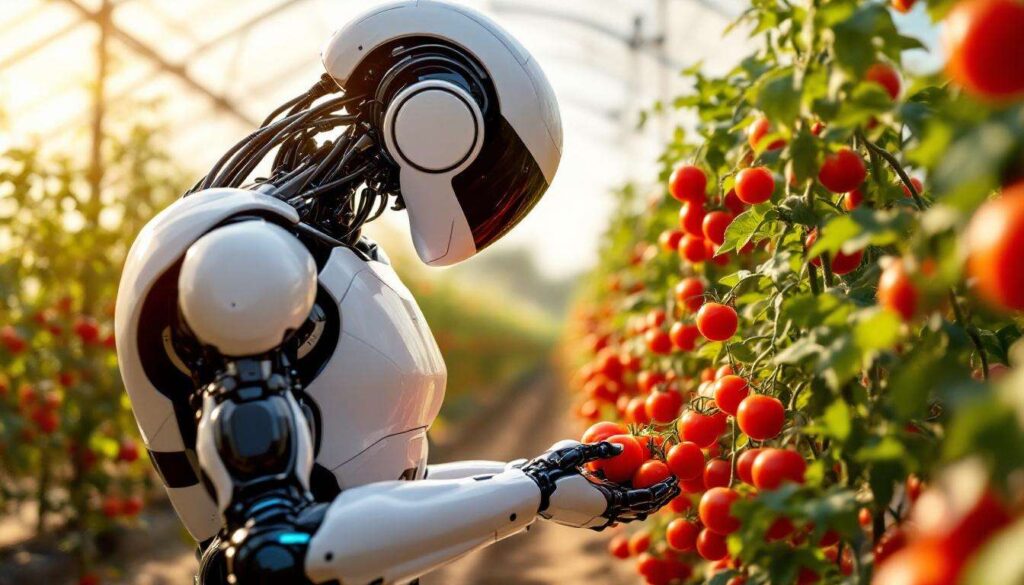
Tomato farming stands at the cusp of a technological revolution as robotic systems equipped with advanced artificial intelligence begin to demonstrate capabilities that could reshape the entire industry. Traditional harvesting methods have long relied on human labour to navigate the complex task of selecting ripe fruit from dense foliage, but emerging technologies now promise to automate this delicate process with unprecedented precision. Research from Osaka Metropolitan University has introduced a groundbreaking approach that enables robots to evaluate whether a tomato can be successfully picked before attempting the harvest, marking a significant departure from conventional automation strategies.
Thinking robots redefine tomato harvesting
The challenge of selective harvesting
Tomato harvesting presents unique obstacles that have historically resisted automation efforts. Unlike crops that can be harvested in bulk, tomatoes grow in clusters where individual fruits ripen at different rates, requiring careful discrimination between ready and unripe produce. The physical arrangement of tomatoes amongst leaves, stems and neighbouring fruit creates a complex three-dimensional puzzle that demands sophisticated decision-making capabilities.
Traditional robotic systems have struggled with this complexity because they typically focus on detection and recognition alone. A robot might successfully identify a ripe tomato yet fail to harvest it due to physical obstructions or awkward positioning. This limitation has resulted in low success rates that make automation economically unviable for many growers.
Harvestability estimation as a paradigm shift
The innovative method developed at Osaka Metropolitan University introduces the concept of harvestability estimation, which fundamentally changes how robots approach the picking process. Rather than simply identifying ripe tomatoes, this system evaluates multiple factors to determine the likelihood of successful harvest before the robot commits to action. The assessment considers:
- The shape and size of individual tomatoes
- The position of fruit relative to the robotic gripper
- Visibility and accessibility through surrounding foliage
- Proximity to unripe tomatoes that must remain undisturbed
- The structural integrity of the cluster
This predictive approach allows robots to prioritise targets with high harvest probability whilst avoiding attempts that would likely fail or damage the plant. By integrating image recognition with statistical analysis, the system creates a comprehensive assessment framework that mirrors the intuitive judgements made by experienced human pickers.
This technological advancement naturally leads to questions about how such precision translates into practical agricultural benefits.
Precision and autonomy serving agriculture
Enhanced operational efficiency
The implementation of thinking robots in tomato farming delivers measurable improvements across multiple operational dimensions. By reducing unsuccessful picking attempts, these systems minimise wasted motion and energy consumption whilst maximising throughput. The ability to work continuously without fatigue enables harvest operations to extend beyond traditional daylight hours, particularly valuable in controlled environment agriculture where lighting can be managed artificially.
| Performance metric | Traditional automation | Harvestability estimation |
|---|---|---|
| Successful pick rate | 45-60% | 75-85% |
| Damage to unripe fruit | Moderate | Minimal |
| Operational hours | 8-10 hours | 20-24 hours |
Quality preservation and yield optimisation
Beyond speed and efficiency, intelligent robotic systems contribute to improved produce quality by ensuring that only appropriately ripe tomatoes are harvested. This selective approach prevents premature picking that can compromise flavour and nutritional content whilst reducing post-harvest sorting requirements. The gentle handling mechanisms employed by modern agricultural robots also minimise bruising and damage that typically occurs during manual harvesting.
The precision offered by these systems extends to data collection, as robots can simultaneously gather information about plant health, growth patterns and environmental conditions. This dual functionality transforms harvesting equipment into comprehensive monitoring tools that support broader farm management decisions.
These operational advantages address pressing challenges facing the agricultural sector today.
How artificial intelligence addresses labour shortages
The agricultural workforce crisis
Modern agriculture faces an acute shortage of available labour, particularly for seasonal harvesting operations that require large temporary workforces. Demographic shifts, changing employment preferences and restrictive immigration policies have combined to create persistent gaps between labour demand and supply. Tomato production has been especially vulnerable to these trends due to the labour-intensive nature of selective harvesting.
The economic implications extend beyond simple wage costs. Growers increasingly report situations where crops remain unharvested due to insufficient workers, resulting in direct financial losses and supply chain disruptions. This unreliability threatens the viability of domestic production and encourages consolidation within the industry.
Robotics as a sustainable solution
Artificial intelligence-equipped robots offer a viable alternative that addresses workforce shortages without compromising harvest quality or timing. The initial capital investment in robotic systems must be weighed against the long-term benefits of:
- Consistent availability regardless of labour market conditions
- Predictable operational costs that facilitate financial planning
- Scalability that allows operations to expand without proportional workforce increases
- Reduced exposure to regulatory changes affecting employment
- Enhanced workplace safety through automation of repetitive tasks
These systems complement rather than entirely replace human workers, with skilled technicians required for maintenance, oversight and handling of exceptional situations that exceed current robotic capabilities.
The broader implications of these technologies extend well beyond labour economics.
The impact of robotic innovations on agricultural production
Transformation of production systems
Intelligent harvesting robots are catalysing fundamental changes in how tomato production facilities are designed and operated. Vertical farms and greenhouse operations increasingly incorporate automation-friendly layouts that optimise robotic access whilst maintaining ideal growing conditions. This co-evolution of infrastructure and technology creates synergies that enhance overall system performance.
The integration of harvestability estimation with other precision agriculture technologies enables unprecedented control over production variables. Growers can now coordinate planting schedules, environmental management and harvesting operations with algorithmic precision, maximising resource utilisation and crop quality.
Economic and environmental considerations
The adoption of robotic harvesting systems carries significant economic implications for producers of various scales. Whilst large commercial operations may more easily absorb initial capital costs, the technology’s improving cost-effectiveness is gradually making it accessible to mid-sized growers. The environmental benefits include reduced food waste through optimised harvest timing and decreased reliance on chemical ripening agents.
These developments point towards an agricultural landscape fundamentally altered by intelligent automation.
The future of smart farming with thinking machines
Expansion beyond tomatoes
The principles underlying harvestability estimation possess broad applicability across numerous crops facing similar harvesting challenges. Soft fruits such as strawberries, peppers and cucumbers could benefit from adapted versions of this technology, potentially revolutionising production systems throughout horticulture. The modular nature of artificial intelligence systems allows rapid refinement and deployment across different agricultural contexts.
Integration with comprehensive farm management
Future developments will likely see harvesting robots integrated within holistic farm management ecosystems that coordinate all aspects of production. Machine learning algorithms will continuously refine harvesting strategies based on accumulated experience, whilst networked systems share insights across multiple facilities. This collective intelligence approach promises ongoing performance improvements that compound over time.
The convergence of robotics, artificial intelligence and precision agriculture represents more than incremental improvement. It constitutes a fundamental reimagining of food production that addresses contemporary challenges whilst creating opportunities for sustainable intensification. As these technologies mature and become more accessible, they will increasingly define competitive advantage within the agricultural sector, rewarding early adopters whilst establishing new industry standards.
The transformation of tomato farming through thinking robots demonstrates how targeted technological innovation can resolve longstanding agricultural challenges. By enabling machines to assess harvest feasibility before acting, researchers have created systems that combine the precision of automation with decision-making capabilities previously exclusive to human workers. This advancement addresses critical labour shortages whilst improving operational efficiency, crop quality and economic sustainability. As the technology expands to other crops and integrates with broader farm management systems, it promises to establish new paradigms for agricultural production that balance productivity with resource conservation.