



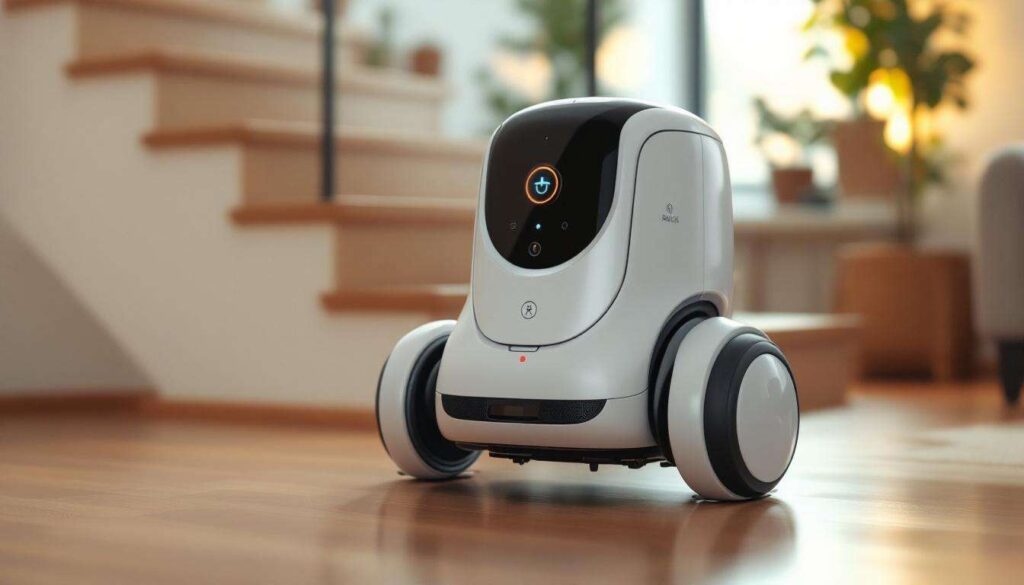
The domestic cleaning landscape has witnessed a remarkable transformation with the arrival of intelligent robotic devices designed to simplify household chores. Yet, despite their impressive capabilities, these machines have long been constrained by a fundamental limitation: their inability to navigate between different floor levels. This barrier has now been shattered with a groundbreaking product that promises to redefine what consumers can expect from automated cleaning technology. The innovation represents not merely an incremental improvement but a complete reimagining of how robotic vacuums can move and function within multi-storey residences.
Introducing the Roborock Saros Rover
Revolutionary design and engineering
The Saros Rover stands as the world’s first robot vacuum equipped with wheel-leg architecture, a technological feat that distinguishes it from every other cleaning device currently available. Unlike conventional robotic vacuums that rely solely on wheels attached to a flat, disc-shaped body, this innovative machine incorporates a dual-functionality mobility system that combines the efficiency of wheels with the adaptability of articulated legs. This hybrid approach enables the device to transition seamlessly between traditional rolling motion on flat surfaces and climbing movements when confronted with vertical obstacles.
The engineering behind this achievement involves sophisticated mechanical design that allows each leg to support the device’s weight whilst maintaining stability during ascent and descent. The integration of these components within a consumer-grade product represents a significant achievement in robotics, bringing capabilities previously reserved for research laboratories into everyday household applications.
Technical specifications and capabilities
The device’s mobility system comprises several key features:
- Two independently articulated wheel-leg assemblies that provide dynamic movement
- Advanced sensors that detect changes in elevation and surface composition
- Real-time adjustment mechanisms that modify leg positioning based on environmental conditions
- Integrated wheels within each leg structure that enable smooth transitions between climbing and rolling modes
This combination of features ensures that the Saros Rover can navigate complex household environments with unprecedented versatility, reaching areas that have historically remained inaccessible to automated cleaning devices. The mechanical complexity required to achieve this functionality demonstrates the manufacturer’s commitment to pushing technological boundaries.
Understanding how this device overcomes physical obstacles requires examining the specific technologies that enable its remarkable climbing abilities.
Stair-climbing technology innovation
Artificial intelligence and spatial awareness
At the heart of the Saros Rover’s capabilities lies sophisticated artificial intelligence algorithms that provide comprehensive 3D spatial awareness. This technology enables the device to construct detailed mental maps of its environment, identifying not only the location of obstacles but also their three-dimensional characteristics. The system analyses stair dimensions, surface textures, and incline angles, calculating optimal approaches for successful navigation.
The AI continuously processes sensory data to maintain dynamic balance and posture adjustment throughout climbing operations. This real-time computational capability ensures that the device can respond to unexpected variations in surface conditions, such as transitioning from hardwood to carpeted stairs or navigating curved staircase designs that present unique geometric challenges.
Practical applications and performance
The stair-climbing functionality extends beyond mere novelty, offering genuine practical benefits:
| Surface Type | Capability | Benefit |
|---|---|---|
| Straight stairs | Full ascent and descent with cleaning | Complete multi-level coverage |
| Curved stairs | Adaptive navigation with posture adjustment | Compatibility with varied architectural designs |
| Carpeted steps | Surface detection and traction optimisation | Effective cleaning on diverse materials |
| Inclined surfaces | Angle assessment and balance maintenance | Safe operation on slopes and ramps |
The device’s ability to clean whilst ascending or descending stairs represents a dual-purpose functionality that maximises efficiency, eliminating the need for separate cleaning operations on vertical surfaces.
These technological achievements position the Saros Rover as a transformative product within the broader context of home automation development.
A step forward in robotic cleaning
Addressing long-standing limitations
Traditional robotic vacuums have operated under significant constraints, primarily their confinement to single floor levels. Homeowners with multi-storey residences have been compelled to either purchase multiple units or manually transport devices between floors, negating much of the convenience that automation promises. The Saros Rover eliminates this fundamental barrier, offering a comprehensive cleaning solution that requires minimal human intervention regardless of home layout.
This advancement addresses a critical gap in the market, as consumer demand for truly autonomous cleaning systems has grown alongside the increasing sophistication of smart home ecosystems. The ability to navigate vertical spaces represents the final frontier in achieving complete household coverage through automated means.
Comparative advantages and market positioning
When evaluated against existing products, the Saros Rover offers distinct advantages:
- Elimination of manual relocation between floors
- Comprehensive cleaning coverage across all accessible areas
- Reduced need for multiple device purchases
- Enhanced return on investment through expanded functionality
- Future-proof design that anticipates evolving consumer expectations
The device represents not merely an improved version of existing technology but rather a paradigm shift in how robotic cleaning systems are conceptualised and implemented. This positions the manufacturer at the forefront of innovation within an increasingly competitive market sector.
The strategic importance of this launch is further emphasised through high-profile partnerships that underscore the brand’s ambitions.
In collaboration with Real Madrid
Strategic partnership significance
The unveiling of the Saros Rover occurred alongside the announcement of a partnership with one of football’s most prestigious institutions. This collaboration serves multiple strategic purposes, associating the brand with excellence, innovation, and global recognition. The alignment with a world-renowned sporting organisation extends the manufacturer’s reach beyond traditional technology audiences, positioning robotic vacuum technology within a broader lifestyle context.
Such partnerships demonstrate the manufacturer’s confidence in its products and its ambition to establish itself as a premium brand within the consumer electronics landscape. The association with athletic excellence creates metaphorical parallels with the device’s performance characteristics, emphasising agility, precision, and reliability.
Expanded product ecosystem
The presentation also introduced complementary products that broaden the manufacturer’s portfolio. The Roborock Saros 20 and the RockMow X1 LiDAR for lawn maintenance indicate a comprehensive approach to outdoor and indoor automation, particularly targeting expansion within the United States market. This diversification strategy positions the company to capture multiple segments within the home automation sector, offering integrated solutions that address various household maintenance requirements.
These strategic moves raise important questions about commercial availability and market readiness for such advanced technology.
Availability and market expectations
Commercial deployment considerations
Whilst the Saros Rover has generated substantial interest following its presentation, specific commercialisation details remain to be confirmed. The transition from prototype demonstration to mass-market availability involves numerous considerations, including manufacturing scalability, pricing strategies, regulatory compliance, and distribution logistics. The complexity of the device’s mechanical and computational systems may necessitate careful quality control measures to ensure reliability in diverse real-world conditions.
Consumer expectations have been significantly elevated by the demonstration, creating both opportunity and pressure for the manufacturer to deliver a product that performs as impressively in everyday use as it does in controlled presentation environments.
Pricing and market positioning
The anticipated pricing structure will play a crucial role in determining market penetration. Factors influencing cost considerations include:
- Advanced mechanical components requiring precision engineering
- Sophisticated AI systems demanding substantial computational resources
- Research and development investments necessitating recovery through sales
- Premium positioning justified by unique capabilities
The balance between accessibility and premium positioning will determine whether the Saros Rover becomes a mainstream product or remains a high-end option for early adopters and technology enthusiasts.
Looking beyond immediate commercial concerns, this innovation signals broader trends within the robotic cleaning industry.
The future of robotic vacuums
Industry trajectory and innovation trends
The introduction of stair-climbing capability represents a significant milestone in the evolution of robotic cleaning devices. As manufacturers continue to push technological boundaries, future developments may include enhanced manipulation capabilities, improved object recognition, and integration with broader smart home ecosystems. The progression from simple automated sweepers to sophisticated, mobile robots demonstrates the rapid pace of innovation within this sector.
Consumer expectations will continue to rise as technological capabilities expand, creating ongoing pressure for manufacturers to differentiate their offerings through meaningful innovations rather than incremental improvements. The Saros Rover establishes a new benchmark against which future products will be measured.
Implications for smart home integration
The advancement of robotic vacuum technology aligns with broader trends in home automation, where interconnected devices work collaboratively to manage household functions. Future iterations may incorporate:
- Enhanced communication with other smart home systems
- Predictive maintenance capabilities that anticipate service requirements
- Adaptive learning that optimises cleaning schedules based on household patterns
- Integration with voice assistants and centralised control platforms
These developments promise to transform robotic vacuums from standalone appliances into integral components of comprehensive home management systems.
The Saros Rover marks a defining moment in robotic cleaning technology, introducing capabilities that fundamentally expand what these devices can achieve. By overcoming the long-standing limitation of stair navigation, the innovation addresses a critical gap that has constrained the utility of automated cleaning systems in multi-level homes. The sophisticated combination of mechanical engineering and artificial intelligence demonstrates the potential for continued advancement within this sector. Whilst commercial availability details await confirmation, the technological achievement itself signals a new era in home automation. The strategic partnerships and expanded product ecosystem indicate ambitious growth plans that extend beyond single-product launches. As consumer expectations evolve alongside technological capabilities, innovations such as the Saros Rover will likely influence industry standards and shape future development trajectories. The transformation of robotic vacuums from simple floor cleaners to versatile, mobile devices capable of navigating complex environments represents a significant step towards truly autonomous household maintenance systems.