



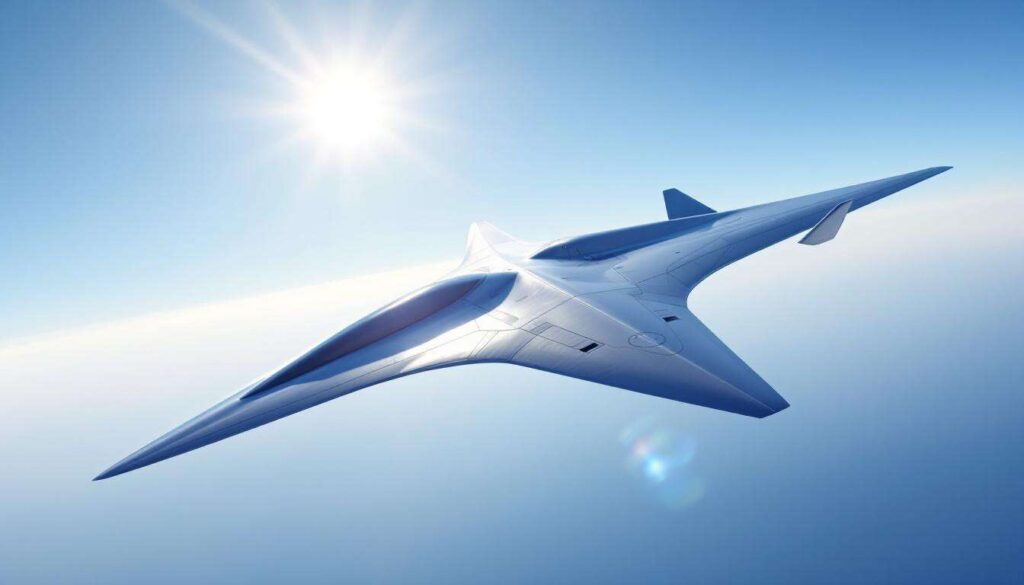
NASA’s groundbreaking X-59 aircraft has successfully completed its maiden test flight, marking a pivotal moment in the quest to revolutionise commercial air travel. This sleek, experimental supersonic jet, nicknamed the ‘flying swordfish’ due to its distinctive elongated nose, promises to transform how we perceive high-speed aviation by addressing one of the industry’s most persistent challenges: the disruptive sonic boom. Engineers and aviation enthusiasts worldwide have watched with anticipation as this remarkable aircraft took to the skies, demonstrating technologies that could reshape the future of transcontinental travel.
Presentation of NASA’s ‘flying swordfish’
Design characteristics
The X-59 Quiet SuperSonic Technology aircraft represents a radical departure from conventional supersonic jet design. Its most striking feature is an exceptionally long, tapered nose that extends nearly one-third of the aircraft’s total length, measuring approximately 11.5 metres. This distinctive profile serves a crucial aerodynamic purpose, carefully shaping the shockwaves generated during supersonic flight.
Key specifications of the X-59 include:
- Overall length of 29.5 metres
- Wingspan of 8.8 metres
- Maximum speed of Mach 1.4 (approximately 1,510 kilometres per hour)
- Cruising altitude of 16,764 metres
- Single-seat cockpit configuration
Innovative cockpit technology
The aircraft’s elongated nose design creates an unexpected challenge: the pilot cannot see directly forward during flight. NASA engineers addressed this limitation by developing an eXternal Vision System, which uses high-resolution cameras and advanced display technology to provide pilots with a comprehensive forward view. This innovative solution demonstrates how modern aviation can overcome traditional design constraints through digital innovation.
These unique design elements work in concert to achieve the aircraft’s primary mission, which connects directly to the technological breakthroughs that make such ambitious engineering possible.
Technological advancements in supersonic flight
Shockwave management systems
The X-59’s revolutionary approach centres on reshaping sonic booms into quieter sonic thumps. Traditional supersonic aircraft generate powerful shockwaves that merge into a loud, startling boom audible on the ground. The X-59’s carefully sculpted fuselage prevents these shockwaves from coalescing, instead creating a series of smaller, dispersed pressure waves that reach the ground as a gentle rumble.
| Aircraft Type | Noise Level | Ground Impact |
|---|---|---|
| Concorde | 105-110 dB | Disruptive boom |
| X-59 | 75 dB (target) | Soft thump |
| Car door closing | 70-80 dB | Reference comparison |
Computational fluid dynamics
Developing the X-59 required thousands of hours of supercomputer simulations to model airflow patterns and shockwave behaviour. Engineers utilised advanced computational fluid dynamics software to test countless design iterations virtually before committing to physical prototypes. This approach significantly reduced development costs whilst accelerating the design process, demonstrating how digital tools have become indispensable in modern aerospace engineering.
These technological achievements have enabled NASA to reach a milestone that seemed impossible just decades ago.
A historic step for modern aviation
The inaugural flight
The X-59 lifted off from Lockheed Martin’s Skunk Works facility in Palmdale, California, with NASA test pilot Jim Less at the controls. The flight lasted approximately 25 minutes, during which the aircraft performed basic handling tests at subsonic speeds. This cautious approach allowed engineers to verify fundamental systems before progressing to more demanding supersonic test phases.
Development timeline milestones
The journey to this historic moment involved:
- Initial concept studies beginning in the early 2010s
- Formal programme approval and funding allocation
- Design finalisation and wind tunnel testing
- Assembly and integration of advanced systems
- Extensive ground testing and taxi trials
This methodical progression reflects NASA’s commitment to rigorous safety standards and thorough validation processes. Each phase built upon previous achievements, creating a foundation for the ambitious objectives driving this entire programme.
Objectives of the ultraquiet project
Community acceptance studies
NASA plans to conduct comprehensive acoustic testing over selected communities across the United States. These flights will gather crucial data about public perception of the X-59’s reduced sonic signature. Residents will provide feedback through surveys and monitoring equipment, helping researchers understand whether the quieter supersonic flight is acceptable for routine operations over populated areas.
Regulatory framework development
Current regulations prohibit supersonic flight over land in most countries due to noise pollution concerns. The X-59 programme aims to provide scientific evidence that could persuade regulatory bodies, including the Federal Aviation Administration and international authorities, to reconsider these restrictions. Success could open vast new route networks for future supersonic commercial aircraft, dramatically reducing travel times on domestic and international flights.
However, achieving these ambitious goals requires overcoming substantial technical and operational hurdles that have challenged aviation engineers for generations.
The challenges of supersonic flights
Economic viability concerns
Supersonic travel faces significant cost barriers. Fuel consumption increases dramatically at higher speeds, and specialised materials required for supersonic aircraft add substantial manufacturing expenses. Airlines must balance these elevated operating costs against passenger willingness to pay premium fares for reduced journey times.
Infrastructure requirements
Implementing widespread supersonic operations would necessitate:
- Modified airport facilities to accommodate unique aircraft specifications
- Enhanced air traffic control systems for mixed-speed operations
- Specialised maintenance facilities and trained personnel
- Updated safety protocols for supersonic operations
Technical limitations
Beyond noise reduction, engineers must address thermal management challenges caused by aerodynamic heating at supersonic speeds. The X-59’s airframe experiences significant temperature increases during high-speed flight, requiring advanced materials and cooling systems. These technical demands increase complexity and weight, creating cascading effects on aircraft performance and efficiency.
These practical considerations intersect with broader environmental questions that will ultimately determine the technology’s long-term viability.
Environmental impact and future prospects
Carbon emissions analysis
Supersonic aircraft typically consume significantly more fuel per passenger-kilometre than conventional jets. The X-59 programme focuses primarily on noise reduction rather than fuel efficiency, raising questions about sustainability in an era of increasing climate awareness. Future commercial applications will need to incorporate sustainable aviation fuels or alternative propulsion technologies to align with environmental objectives.
Potential industry transformation
If successful, the X-59’s technology could catalyse development of a new generation of supersonic business jets and commercial airliners. Several aerospace companies are already exploring quiet supersonic designs for various market segments. The technology might enable:
- Transcontinental flights completed in half the current time
- Enhanced global connectivity for business travellers
- New economic opportunities through reduced travel duration
- Expanded tourism possibilities with more accessible distant destinations
The coming years will prove critical as NASA completes its testing programme and shares findings with regulatory authorities and industry partners worldwide.
The X-59’s successful first flight represents more than a technical achievement; it symbolises aviation’s continuing evolution towards faster, more efficient travel. By addressing the sonic boom challenge that grounded previous supersonic ambitions, NASA has reopened possibilities that seemed permanently closed. Whether this technology ultimately enables widespread supersonic travel depends on resolving economic, environmental, and regulatory challenges that extend far beyond the engineering laboratory. The ‘flying swordfish’ has taken wing, but its true test lies in demonstrating that supersonic flight can coexist harmoniously with the communities below.