



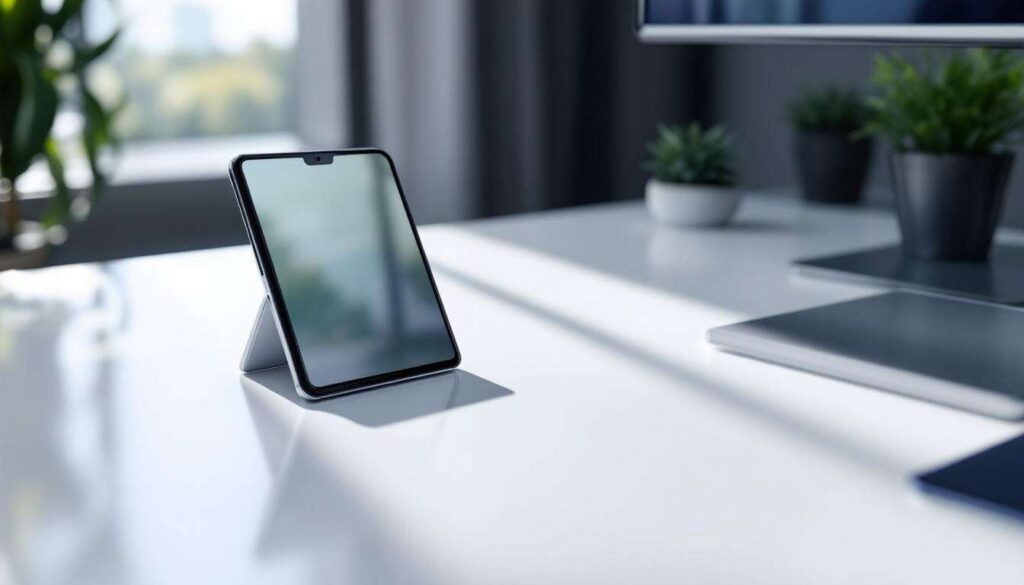
Samsung has long positioned itself at the forefront of mobile technology, consistently pushing boundaries to redefine what smartphones can achieve. The recent unveiling of the Galaxy Z TriFold represents a pivotal moment in the evolution of foldable devices, introducing a double-fold mechanism that transforms a compact handset into a sprawling 10-inch display. This ambitious design raises fundamental questions about the trajectory of foldable smartphones and whether such innovations can overcome longstanding concerns about durability, practicality, and market adoption. As the mobile industry watches closely, the Galaxy Z TriFold stands as both a technological showcase and a test of consumer appetite for devices that challenge conventional form factors.
Samsung and innovation: a bold vision for the Galaxy Z TriFold
A decade of foldable leadership
Samsung’s commitment to foldable technology spans more than ten years, during which the company has refined hinge mechanisms, display materials, and software optimisation. The Galaxy Z TriFold emerges from this sustained research effort, representing the culmination of iterative improvements across multiple device generations. The company’s leadership within the Device eXperience division has consistently emphasised that innovation should not merely replicate existing experiences but rather expand possibilities for users seeking versatility without compromise.
Balancing portability with performance
The core philosophy driving the Galaxy Z TriFold centres on achieving equilibrium between several competing demands:
- Maintaining a pocket-friendly form factor when folded
- Delivering premium performance comparable to flagship devices
- Providing a large-screen experience for productivity and entertainment
- Ensuring durability sufficient for daily use
This approach reflects Samsung’s understanding that foldable devices must justify their complexity by offering tangible benefits over traditional smartphones. The Galaxy Z TriFold attempts to address this challenge by positioning itself as a device that adapts to user needs rather than forcing users to adapt to technological limitations.
The ambitious scope of this vision naturally leads to questions about how Samsung has translated these principles into actual design and engineering solutions.
Galaxy Z TriFold: redrawing the concept of a foldable smartphone
The double-fold mechanism explained
Unlike previous foldable models that typically feature a single hinge, the Galaxy Z TriFold incorporates two distinct folding points, allowing the device to collapse into a compact form or unfold into a tablet-sized display. When fully extended, the 10-inch AMOLED screen provides a cinematic viewing experience that rivals dedicated tablets whilst maintaining the portability of a smartphone when folded.
Display technology and visual experience
The AMOLED technology employed in the Galaxy Z TriFold offers several advantages for a foldable format:
| Feature | Benefit |
|---|---|
| Flexibility | Allows repeated folding without permanent damage |
| Colour accuracy | Delivers vibrant visuals for media consumption |
| Power efficiency | Extends battery life despite large screen size |
| Thin profile | Reduces overall device thickness when folded |
The seamless transition between folded and unfolded states represents a significant engineering achievement, as the display must maintain visual consistency across multiple panels whilst accommodating the mechanical stress of repeated folding.
However, achieving this level of functionality requires overcoming substantial engineering obstacles that extend beyond display technology alone.
Between ingenuity and durability: the design challenges of the Galaxy Z TriFold
Hinge engineering and mechanical resilience
The dual-hinge system represents one of the most technically demanding aspects of the Galaxy Z TriFold’s design. Each hinge must withstand thousands of folding cycles whilst maintaining precise alignment and smooth operation. Samsung has invested considerable resources in developing hinge mechanisms that balance robustness with elegance, ensuring that the device feels premium rather than fragile.
Material selection and protective measures
Protecting the flexible display requires careful material choices:
- Ultra-thin glass layers that provide scratch resistance
- Protective films that absorb impact without compromising touch sensitivity
- Reinforced frames that distribute stress away from vulnerable folding points
- Water and dust resistance measures adapted to the foldable format
These considerations directly impact both the longevity of the device and user confidence in its reliability, factors that have historically limited widespread adoption of foldable smartphones.
Addressing consumer durability concerns
Previous generations of foldable devices have faced criticism regarding their long-term durability, with reports of screen creasing, hinge failures, and protective layer deterioration. The Galaxy Z TriFold must overcome these perceptions by demonstrating that its more complex mechanism does not introduce additional vulnerability. Samsung’s warranty provisions and repair programmes will likely play a crucial role in building consumer confidence.
Beyond structural integrity, the practical utility of such a device depends heavily on how effectively it supports real-world workflows and usage patterns.
A step forward for mobile productivity with the Galaxy Z TriFold
Multitasking capabilities and workspace optimisation
The expansive 10-inch display enables genuine multitasking scenarios that remain cumbersome on traditional smartphones. Users can simultaneously view documents, communicate via messaging applications, and reference web content without constant switching between apps. This capability positions the Galaxy Z TriFold as a potential replacement for tablets and even lightweight laptops in certain use cases.
Professional applications and creative workflows
Specific professional scenarios benefit particularly from the Galaxy Z TriFold’s design:
- Graphic designers can sketch and reference materials simultaneously
- Business professionals can present content whilst monitoring communications
- Content creators can edit video with expanded timeline visibility
- Researchers can read academic papers with comfortable text sizing
The device’s ability to function as both a portable communication tool and a productivity workstation represents a significant step towards convergence of device categories.
Complementing these hardware capabilities, Samsung has integrated software features designed to maximise the potential of the unique form factor.
Intelligent features for an enriched user experience
AI-powered optimisation and adaptive interfaces
The Galaxy Z TriFold incorporates artificial intelligence systems that adapt the user interface based on how the device is folded. Applications automatically adjust their layouts to take advantage of available screen real estate, whilst predictive algorithms anticipate user needs based on context and usage patterns. This intelligent adaptation reduces the cognitive burden of managing a complex device.
Continuity across folding states
Samsung has prioritised seamless transitions between different device configurations:
| Configuration | Optimised Use Cases |
|---|---|
| Fully folded | Quick communications, notifications, portability |
| Partially unfolded | Video calls, reading, one-handed browsing |
| Fully unfolded | Productivity, media consumption, gaming |
This flexibility allows users to adapt the device to their immediate needs rather than adjusting their behaviour to accommodate technological constraints.
These innovations collectively suggest that the Galaxy Z TriFold may represent more than an incremental improvement, potentially signalling a fundamental shift in smartphone evolution.
The future of foldable smartphones with the Galaxy Z TriFold: a pivotal moment
Market reception and adoption challenges
The success of the Galaxy Z TriFold will ultimately depend on whether consumers perceive sufficient value to justify the premium pricing and potential durability concerns associated with foldable devices. Early adopters and technology enthusiasts may embrace the innovation, but mainstream acceptance requires demonstrating clear advantages over established form factors.
Influence on industry direction
Samsung’s competitors will undoubtedly scrutinise the Galaxy Z TriFold’s reception, using market feedback to inform their own development strategies. If the device proves commercially successful, it may accelerate industry-wide investment in multi-fold mechanisms and flexible display technology. Conversely, lukewarm reception could prompt manufacturers to focus on refining single-fold designs or exploring alternative form factors entirely.
Long-term viability of the foldable category
The Galaxy Z TriFold represents a crucial test of whether foldable smartphones can evolve beyond niche products into mainstream devices. Key factors determining this outcome include:
- Price reductions as manufacturing processes mature
- Demonstrated durability across extended usage periods
- Software ecosystem development that leverages unique capabilities
- Consumer willingness to adapt workflows to new form factors
The device’s impact extends beyond immediate sales figures, potentially influencing the trajectory of mobile computing for years to come.
Samsung’s Galaxy Z TriFold represents an ambitious attempt to redefine smartphone capabilities through innovative engineering and thoughtful design. By introducing a double-fold mechanism that transforms a compact device into a tablet-sized workspace, the company challenges conventional assumptions about mobile form factors. The success of this approach depends on overcoming durability concerns, demonstrating clear productivity advantages, and convincing consumers that the added complexity delivers tangible benefits. Whether the Galaxy Z TriFold becomes a catalyst for widespread foldable adoption or remains a technological curiosity will depend on market reception and Samsung’s ability to refine the concept based on real-world usage. The device undeniably showcases impressive engineering, but its true significance lies in whether it can transform foldable smartphones from intriguing experiments into essential tools for a mobile-first generation.