



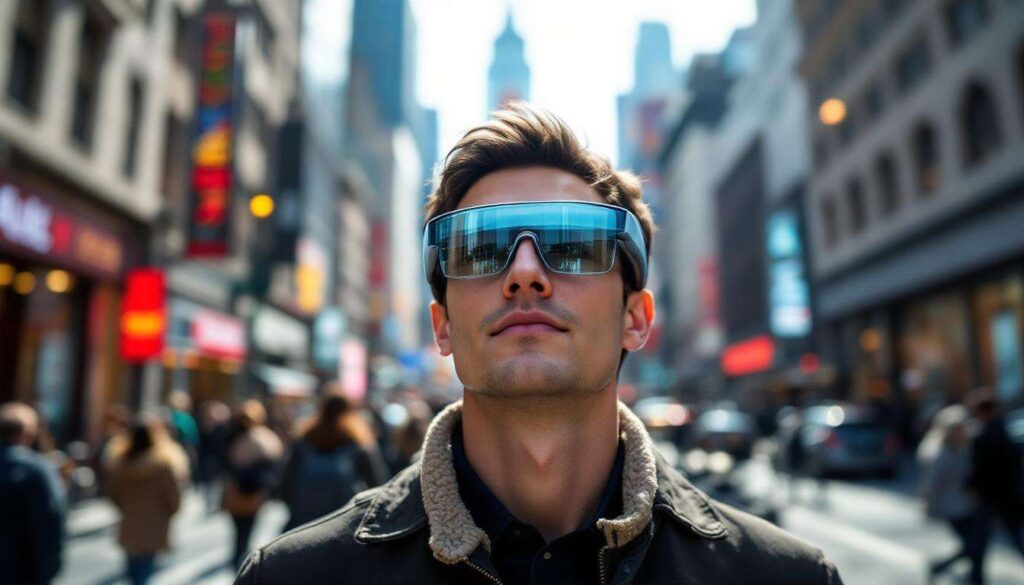
Smart glasses have long promised to revolutionise how we interact with technology, yet their journey has been fraught with setbacks. Google Glass, once hailed as the future of wearable computing, faced significant challenges that led to its withdrawal from the consumer market. Now, with plans to relaunch in the coming months, the question arises whether this technology can finally overcome its troubled past and find genuine acceptance amongst users.
The initial failure of Google Glass: what happened ?
A revolutionary concept met with resistance
When Google Glass first appeared as a prototype, it captured imaginations with its augmented reality capabilities and hands-free interface. The device promised to overlay digital information onto the physical world, enabling users to access notifications, take photographs, and navigate without touching their smartphones. However, the reality proved far more complicated than the vision.
Technical and social limitations
Several critical factors contributed to the product’s downfall:
- The device’s battery life was insufficient for daily use, often requiring charging multiple times throughout the day
- The high price point made it inaccessible to most consumers, positioning it as an exclusive gadget rather than a practical tool
- The design was conspicuous and often perceived as socially awkward, earning wearers the unflattering nickname “Glassholes”
- Limited functionality failed to justify the investment, with many features feeling more like novelties than necessities
The privacy backlash
Perhaps most damaging was the public concern over privacy. The ability to record video and capture images discreetly made people uncomfortable, leading to bans in various establishments including cinemas, bars, and even certain workplaces. This social rejection proved insurmountable for consumer adoption. The professional version launched subsequently also struggled, eventually being discontinued, leaving Google’s smart glasses ambitions seemingly dead. Understanding these failures provides essential context for evaluating the upcoming relaunch.
The resurrection of connected glasses: a new era in 2026 ?
A strategic return with artificial intelligence
The announcement of new Google Glass models represents a calculated attempt to re-enter a market that has evolved considerably. This time, the integration of artificial intelligence sits at the core of the product strategy, with features designed to leverage conversational AI and real-time information processing. One model reportedly eschews a screen entirely, relying instead on audio feedback and voice commands.
Learning from past mistakes
Google appears to have absorbed lessons from previous iterations. The new approach focuses on:
- Enhanced battery performance to support all-day usage
- More discreet and fashionable designs that blend with everyday eyewear
- Clearer value propositions centred on practical applications rather than novelty
- Integration with existing Google services and AI platforms like Gemini
Market conditions have shifted
The landscape for wearable technology has transformed dramatically. Consumer acceptance of smartwatches and fitness trackers has normalised the concept of connected devices. Furthermore, the explosive growth in AI applications has created new use cases that simply did not exist during Google Glass’s first incarnation. This changing environment may provide the foundation needed for success, though significant obstacles remain.
Smart glasses: between futuristic potential and current obstacles
Competing in a crowded marketplace
The smart glasses sector has witnessed remarkable growth, with competitors achieving substantial commercial success. Meta’s offerings have reportedly sold millions of units, demonstrating genuine consumer appetite when products are executed properly. This success proves the market exists, but it also means Google faces established competition with loyal customer bases.
The social acceptability challenge
Research into wearable technology adoption highlights that social acceptability remains paramount. The WEAR scale framework identifies key factors influencing whether users will adopt and continue using wearable devices:
| Factor | Impact on adoption |
|---|---|
| Aesthetic design | High – devices must look socially appropriate |
| Perceived functionality | High – clear benefits must be evident |
| Privacy concerns | Critical – users need assurance about data security |
| Social stigma | Medium to high – negative perceptions can prevent adoption |
Defining genuine use cases
For smart glasses to transition from curiosity to necessity, they must solve real problems in users’ daily lives. Potential applications include navigation assistance, real-time translation, hands-free communication in professional settings, and accessibility features for individuals with disabilities. Whether these use cases prove compelling enough to drive mass adoption remains uncertain. These practical considerations connect directly to the technical challenges manufacturers face.
Technology and design: the challenges of augmented reality glasses
Balancing functionality with wearability
Creating smart glasses requires solving complex engineering problems. The devices must be lightweight and comfortable enough for extended wear whilst housing processors, batteries, displays, cameras, and sensors. Achieving this balance has proven extraordinarily difficult, with many prototypes sacrificing either functionality or comfort.
Display technology limitations
Augmented reality displays face particular challenges:
- Brightness levels must compete with ambient light whilst avoiding eye strain
- Field of view needs to be sufficient for useful information display without obstructing natural vision
- Resolution must be sharp enough for text readability at close range
- Power consumption must remain low enough for practical battery life
Processing power and connectivity
Modern smart glasses require substantial computational resources to run AI applications, process sensor data, and maintain connectivity. Miniaturising these components without generating excessive heat or draining batteries quickly presents ongoing technical hurdles. Cloud processing can offload some demands but introduces latency and requires reliable connectivity. These technical considerations intersect with broader concerns about how these devices handle sensitive information.
Privacy and security concerns: a barrier to adoption ?
The persistent recording question
Public anxiety about surreptitious recording remains a fundamental obstacle to smart glasses acceptance. Even with indicator lights showing when cameras are active, people remain uncomfortable around devices capable of capturing their image or conversations without obvious consent. This discomfort is not merely paranoia but reflects legitimate concerns about surveillance and data misuse.
Data protection and corporate responsibility
Smart glasses collect vast amounts of personal data, including:
- Visual information about surroundings and individuals
- Location data with unprecedented precision
- Audio recordings of conversations and environmental sounds
- Biometric data from sensors monitoring the wearer
How manufacturers handle this data, who has access to it, and how long it is retained are critical questions that must be addressed transparently. Regulatory frameworks are still evolving to govern these devices, creating uncertainty for both manufacturers and consumers.
Building trust through design
Overcoming privacy concerns requires more than technical solutions. It demands thoughtful design that respects social norms, clear communication about data practices, and robust security measures to prevent unauthorised access. Without establishing trust, even technically superior products will struggle to achieve widespread acceptance. These considerations ultimately determine whether smart glasses can evolve beyond niche applications.
The future of smart glasses: trendy gadget or essential tool ?
Market indicators suggest cautious optimism
The substantial increase in sales of AI-powered smart glasses demonstrates growing consumer interest. However, this growth has been concentrated amongst early adopters and technology enthusiasts rather than mainstream users. For smart glasses to become essential tools rather than fashionable accessories, they must demonstrate clear advantages over smartphones and other established devices.
Professional versus consumer markets
The distinction between professional and consumer applications may determine the technology’s trajectory. In industrial settings, warehouses, and medical environments, hands-free access to information provides tangible productivity benefits that justify investment. Consumer applications remain less clearly defined, with entertainment, navigation, and social media integration offering incremental rather than transformative value.
The timing question
Whether Google’s relaunch arrives too late depends on multiple factors:
| Consideration | Assessment |
|---|---|
| Market maturity | Growing but not saturated |
| Competitive positioning | Challenging but possible |
| Technology readiness | Improved but still evolving |
| Consumer acceptance | Increasing gradually |
The window for establishing market leadership may be narrowing, but it has not closed entirely. Success will require not just superior technology but also effective marketing, strategic partnerships, and perhaps most importantly, patience in building consumer trust and understanding.
The journey of Google Glass illustrates the challenges inherent in introducing transformative technologies. Technical capabilities alone cannot guarantee success when social acceptance, privacy concerns, and practical utility remain unresolved. The upcoming relaunch represents another opportunity to prove that smart glasses can transcend their troubled history. Whether they become indispensable tools or remain niche gadgets will depend on addressing the fundamental issues that have plagued previous attempts whilst capitalising on advances in artificial intelligence and changing consumer attitudes towards wearable technology. The market has evolved, but so have expectations, and Google faces the formidable task of delivering products that justify renewed faith in a concept many had written off as premature.