



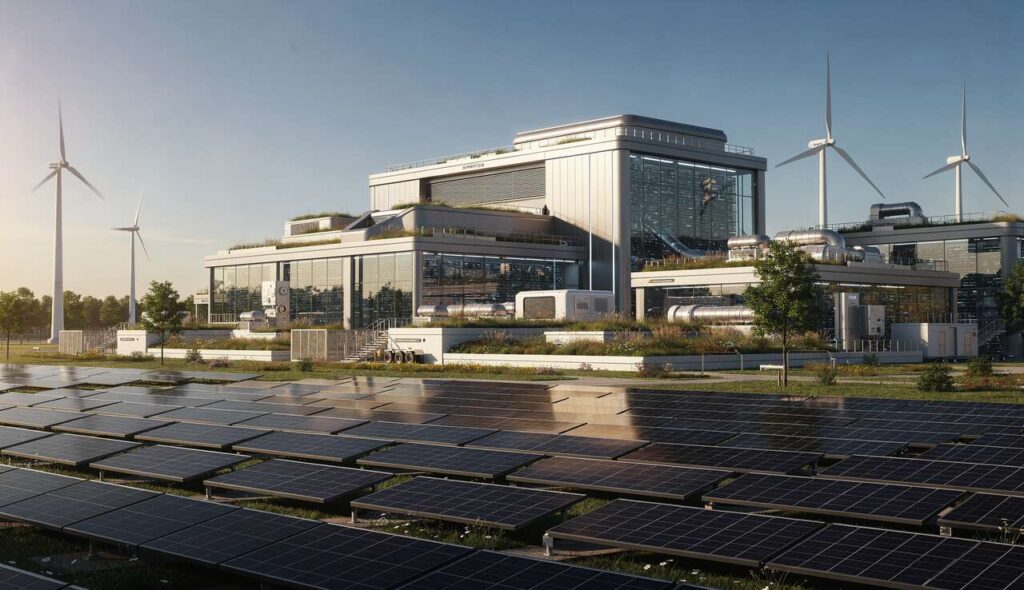
France’s digital infrastructure stands at a critical juncture as new projections reveal staggering possibilities for data centre energy consumption over the coming decades. Recent studies suggest that these facilities could consume anywhere from seven times more electricity than current levels or, conversely, reduce their footprint to half of today’s usage by 2060. This dramatic range reflects the uncertainty surrounding technological advancement, regulatory frameworks, and industry commitment to sustainable practices. The trajectory ultimately depends on strategic decisions made within the next few years, as France grapples with balancing its digital ambitions against environmental imperatives.
Croissance de la consommation énergétique des data centers
Current consumption levels and growth trends
French data centres currently account for approximately 2% of national electricity consumption, a figure that has steadily increased over the past decade. The proliferation of cloud computing, artificial intelligence applications, and streaming services has driven exponential growth in data processing requirements. Industry analysts note that data generation doubles approximately every two years, placing unprecedented demands on infrastructure capacity. This trend shows no signs of abating, with the Internet of Things and 5G networks set to generate additional terabytes of information requiring storage and processing.
Regional distribution of data facilities
The geographical spread of data centres across France reveals concentration patterns that reflect both economic and infrastructural considerations:
- Île-de-France region hosts approximately 60% of national capacity
- Lyon and Marseille emerging as secondary hubs due to connectivity advantages
- Northern regions attracting facilities due to cooler climates reducing cooling costs
- Coastal areas exploring opportunities for renewable energy integration
This distribution pattern influences both energy consumption patterns and the feasibility of implementing sustainable solutions. The concentration in urban areas creates particular challenges for grid management and heat dissipation.
Projected growth scenarios
| Scenario | Energy consumption by 2060 | Key assumptions |
|---|---|---|
| High growth | 7x current levels | Minimal efficiency gains, rapid AI expansion |
| Moderate growth | 2-3x current levels | Steady efficiency improvements, balanced expansion |
| Optimised scenario | 0.5x current levels | Breakthrough technologies, aggressive sustainability measures |
These divergent pathways illustrate how technological choices and policy decisions will fundamentally shape the sector’s environmental footprint, making the next decade particularly crucial for establishing sustainable practices.
Facteurs influençant l’augmentation de la demande en énergie
Artificial intelligence and machine learning demands
The rise of artificial intelligence represents perhaps the most significant driver of increased energy consumption. Training large language models and neural networks requires massive computational resources, with single training runs potentially consuming as much electricity as several hundred households use annually. As AI applications become ubiquitous across industries, this demand multiplies exponentially. French companies increasingly deploy AI solutions for everything from customer service to industrial optimisation, each application adding incremental load to data centre infrastructure.
Digital transformation across industries
Traditional sectors undergoing digitalisation contribute substantially to data centre demand growth:
- Healthcare systems transitioning to electronic records and diagnostic imaging
- Financial services expanding algorithmic trading and risk analysis capabilities
- Manufacturing implementing Industry 4.0 technologies and digital twins
- Retail sectors developing sophisticated inventory and customer analytics platforms
- Government services migrating to cloud-based platforms for citizen services
Each sector’s digital transformation creates persistent, growing demand for data processing and storage capacity.
Consumer behaviour and streaming services
Consumer habits increasingly drive data centre requirements, with video streaming alone accounting for a substantial portion of internet traffic. High-definition and 4K content require significantly more bandwidth and storage than standard definition alternatives. Gaming platforms, particularly cloud gaming services, add another layer of computational demand. Social media platforms continuously process billions of interactions, images, and videos daily. These consumer-facing services show remarkable resilience to economic fluctuations, ensuring consistent growth in underlying infrastructure requirements. Understanding these demand drivers helps contextualise the potential energy implications and the urgency of implementing efficiency measures.
Impact environnemental des centres de données en France
Carbon footprint and emissions
French data centres benefit from the nation’s low-carbon electricity grid, predominantly powered by nuclear and renewable sources. This advantage means that even with increased consumption, carbon emissions remain relatively modest compared to countries reliant on fossil fuels. However, absolute emissions still warrant attention, particularly as demand grows. The carbon intensity of electricity varies by time of day and season, meaning data centres drawing power during peak fossil fuel periods contribute disproportionately to emissions. Indirect emissions from construction, equipment manufacturing, and cooling systems also factor into the total environmental impact.
Water consumption for cooling systems
Cooling represents a critical environmental concern beyond electricity consumption. Traditional data centres utilise substantial quantities of water for cooling purposes, creating pressure on local water resources:
| Cooling method | Water intensity | Prevalence in France |
|---|---|---|
| Traditional air cooling | Low | 40% |
| Evaporative cooling | High | 35% |
| Liquid cooling | Medium | 15% |
| Free cooling | Minimal | 10% |
Water scarcity concerns, particularly during summer months, have prompted regulatory scrutiny of data centre water usage.
Heat waste and urban heat islands
Data centres generate enormous quantities of waste heat, typically dissipated into the atmosphere. This contributes to urban heat island effects in concentrated areas, potentially affecting local climate patterns and energy consumption for air conditioning in surrounding buildings. Progressive operators explore heat recovery systems, capturing waste heat for district heating networks or industrial processes. However, implementation faces technical and economic challenges, particularly regarding infrastructure investment and coordination with municipal heating systems. These environmental considerations increasingly influence planning permissions and operational licences, pushing the industry towards more sustainable approaches.
Initiatives pour réduire la consommation d’énergie
Advanced cooling technologies
Innovation in cooling systems offers substantial efficiency gains. Immersion cooling, where servers operate submerged in non-conductive liquid, reduces energy consumption by up to 40% compared to traditional air cooling. Free cooling systems leverage ambient air temperatures, particularly effective in France’s temperate climate. Artificial intelligence optimises cooling system operation in real-time, adjusting parameters based on workload and environmental conditions. Some facilities experiment with phase-change materials that absorb heat during peak periods and release it during cooler hours, smoothing energy demand patterns.
Hardware efficiency improvements
Processor manufacturers continuously improve energy efficiency, with each generation delivering more computational power per watt consumed. Key developments include:
- ARM-based processors offering superior efficiency for specific workloads
- Specialised AI chips optimised for machine learning tasks
- Solid-state storage replacing mechanical drives, reducing both energy and cooling needs
- Power management systems enabling dynamic voltage and frequency scaling
- Server virtualisation increasing utilisation rates and reducing idle equipment
Renewable energy integration
Major operators increasingly commit to 100% renewable energy sourcing through power purchase agreements and on-site generation. Solar installations on data centre roofs contribute modest but growing proportions of energy needs. Some facilities explore partnerships with wind farms, matching consumption patterns with renewable generation profiles. Battery storage systems enable load shifting, consuming electricity when renewable generation peaks and reducing draw during fossil fuel periods. These initiatives not only reduce environmental impact but also provide hedge against electricity price volatility. The combination of efficiency measures and renewable energy integration forms the foundation for achieving the optimistic consumption scenario.
Scénarios futurs pour les data centers français
The pessimistic trajectory
The sevenfold increase scenario assumes continued rapid growth in data demand without corresponding efficiency improvements. This pathway emerges if AI development accelerates beyond current projections whilst technological breakthroughs in efficiency fail to materialise. Regulatory frameworks remaining lenient and economic incentives favouring expansion over optimisation contribute to this outcome. Under this scenario, data centres could consume approximately 14% of national electricity by 2060, creating significant grid management challenges and potentially requiring dedicated generation capacity.
The optimistic pathway
Conversely, the 50% reduction scenario requires aggressive implementation of efficiency measures combined with architectural innovations. This pathway assumes:
- Widespread adoption of next-generation cooling technologies
- Processor efficiency improvements continuing at current rates
- Software optimisation reducing computational requirements
- Edge computing distributing workloads more efficiently
- Circular economy principles extending hardware lifecycles
Achieving this outcome demands coordinated action across industry, government, and research institutions.
Most probable outcome
Industry experts generally anticipate a moderate growth scenario, with consumption increasing by 2-3 times current levels. This reflects realistic expectations about technological progress balanced against continued demand growth. The actual trajectory will likely vary by facility type, with hyperscale operators achieving greater efficiency than smaller, older facilities. Regional variations will emerge based on local regulations, electricity costs, and climate conditions. This middle path still requires significant investment in efficiency measures to avoid the pessimistic scenario whilst acknowledging the challenges of achieving the optimistic outcome. These projections inform policy development and investment decisions shaping the sector’s evolution.
Régulations et politiques énergétiques à venir
European Union directives
The EU’s Energy Efficiency Directive increasingly targets data centres, mandating reporting of energy consumption and efficiency metrics. Proposed regulations may establish minimum efficiency standards, potentially requiring retrofits of existing facilities. The European Green Deal sets ambitious carbon neutrality targets that implicitly require data centre sector transformation. Extended producer responsibility frameworks may hold operators accountable for equipment lifecycle impacts. These supranational regulations establish baseline requirements that member states can strengthen through national legislation.
French national policies
France has introduced specific measures addressing data centre energy consumption:
| Policy measure | Implementation timeline | Expected impact |
|---|---|---|
| PUE reporting requirements | 2024 | Transparency and benchmarking |
| Heat recovery mandates | 2025 | Waste heat utilisation |
| Renewable energy targets | 2030 | Carbon footprint reduction |
| Water consumption limits | 2027 | Resource conservation |
Industry self-regulation initiatives
Recognising regulatory pressure, industry associations have developed voluntary standards and commitments. The Climate Neutral Data Centre Pact commits signatories to specific efficiency and renewable energy targets. These self-regulatory frameworks often anticipate formal regulations, allowing operators to influence policy development whilst demonstrating good faith efforts. However, critics question whether voluntary measures suffice given the urgency of climate challenges. The interplay between mandatory regulations and voluntary initiatives will shape the sector’s transformation trajectory, determining whether France achieves the optimistic consumption scenario or faces the challenges of unconstrained growth.
The future energy consumption of French data centres remains genuinely uncertain, contingent upon technological innovation, regulatory frameworks, and industry commitment to sustainability. Achieving the optimistic scenario requires coordinated action across multiple domains: breakthrough cooling technologies, continued processor efficiency gains, aggressive renewable energy deployment, and supportive policy frameworks. The pessimistic trajectory is not inevitable but represents the default outcome absent deliberate intervention. France’s advantages, including low-carbon electricity and temperate climate, position the nation favourably for leadership in sustainable data centre operations. The decisions made within the next few years will determine which scenario materialises, with profound implications for national energy systems, climate commitments, and digital economy competitiveness.