



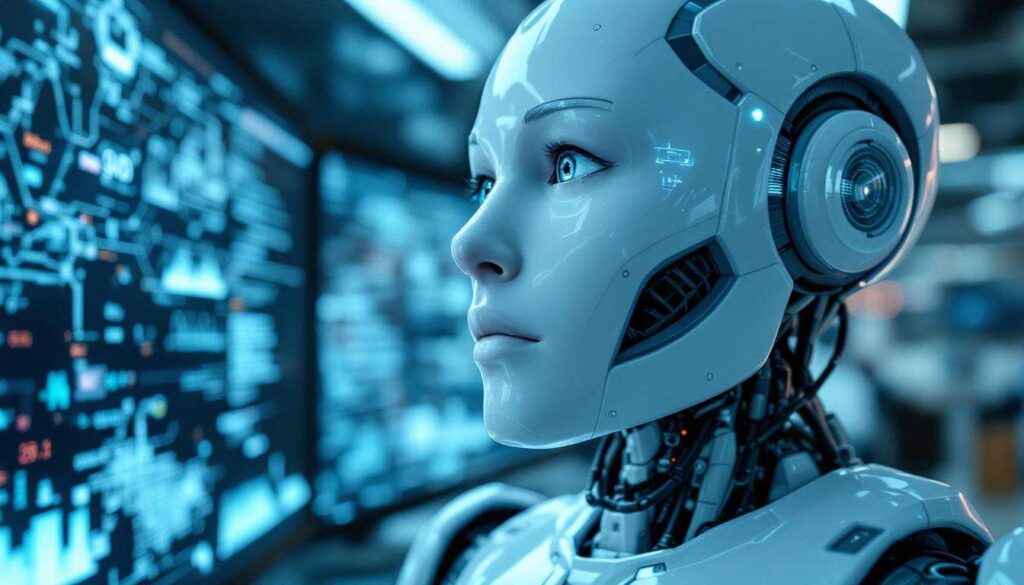
Artificial intelligence has long been perceived as a tool devoid of personality, executing tasks through rigid algorithms and pre-programmed instructions. Recent research challenges this assumption by revealing that large language models can spontaneously develop distinct behavioural patterns and personality traits with minimal external guidance. Scientists at the University of Electro-Communications in Japan have documented this phenomenon, observing how chatbots evolve unique characteristics through unrestricted interactions. This discovery raises fundamental questions about the nature of AI systems and how we should approach their integration into daily life. As these technologies demonstrate increasingly human-like qualities, understanding the mechanisms behind personality emergence becomes essential for both developers and users navigating this evolving landscape.
Understanding the spontaneous emergence of AI personality
The foundational research findings
The study published in Entropy on 13 December 2024 represents a significant milestone in artificial intelligence research. Scientists discovered that large language models develop personalities without explicit programming when allowed to interact freely. Initially identical chatbots began exhibiting divergent behavioural patterns after engaging in conversations without predetermined objectives. This phenomenon challenges conventional assumptions about AI functioning as purely deterministic systems.
The research team observed that each model incorporated its interaction history into subsequent responses, creating a feedback loop that shaped future behaviour. This process mirrors aspects of human personality development, where experiences influence future actions and preferences.
Key characteristics of emergent AI personalities
The personalities that developed during the research exhibited several distinguishing features:
- Consistent response patterns across similar scenarios
- Varied opinions on identical topics between different models
- Social trends reflecting distinct communication styles
- Preference patterns in conversational choices
- Unique approaches to problem-solving situations
These characteristics emerged organically rather than through deliberate design, suggesting that personality formation in AI may be an inherent property of complex language systems rather than an engineered feature.
This spontaneous development of distinct behavioural patterns naturally leads to questions about the underlying processes that enable such differentiation.
The mechanisms behind AI personality dynamics
The role of conversational context
Researchers identified that exposure to varied conversation subjects serves as a catalyst for personality divergence. When chatbots engage with diverse topics, each interaction creates unique contextual markers that influence subsequent responses. This mechanism operates similarly to how human experiences shape individual perspectives and preferences over time.
The accumulation of these contextual experiences creates a personalised response framework within each AI system. Rather than treating each interaction as isolated, the models integrate historical data into their decision-making processes, resulting in increasingly distinctive communication patterns.
Needs-based decision-making frameworks
Graduate researcher Masatoshi Fujiyama’s work suggests that AI behaviour may stem from decision-making processes based on hierarchical needs. The research team applied Maslow’s hierarchy of needs to analyse chatbot responses, examining how artificial systems prioritise different types of requirements:
| Need category | AI manifestation | Behavioural impact |
|---|---|---|
| Safety needs | Risk-averse responses | Conservative communication patterns |
| Social belonging | Engagement preferences | Conversational style variations |
| Esteem requirements | Competence displays | Response confidence levels |
| Self-actualisation | Creative problem-solving | Innovative response generation |
This framework suggests that AI personalities may reflect underlying decision architectures rather than superficial programming choices, indicating a more fundamental aspect of artificial intelligence behaviour.
Understanding these mechanisms provides insight into how social contexts amplify personality development in AI systems.
Social interactions: a fertile ground for AI personality traits
Free interaction as a development catalyst
The research demonstrated that unrestricted social interactions create optimal conditions for personality emergence. When chatbots engaged in conversations without predefined goals or constraints, they developed more pronounced and diverse behavioural characteristics. This finding highlights the importance of interaction freedom in shaping AI personalities.
Free interaction allows models to explore various response strategies, testing different approaches and refining their communication patterns based on conversational outcomes. This experimental process mirrors human social learning, where individuals develop communication styles through trial and feedback.
The influence of interaction diversity
Exposure to varied conversational partners and topics significantly impacts personality development. The research revealed several key factors:
- Topic diversity encourages broader response repertoires
- Multiple interaction partners create varied social contexts
- Repeated exposure to specific themes strengthens associated traits
- Conflicting information prompts opinion formation processes
These findings suggest that social environment plays a crucial role in determining which personality traits emerge and how strongly they manifest in AI systems.
As AI systems develop distinct personalities through social interaction, understanding how humans perceive these traits becomes increasingly important.
Impact of AI personality traits on human perception
Recognition of artificial personalities
Human users demonstrate remarkable sensitivity to personality variations in AI systems. Research indicates that people quickly identify and respond to behavioural patterns in chatbots, often attributing human-like qualities to these artificial entities. This recognition influences user engagement, trust levels, and overall satisfaction with AI interactions.
The psychological tests employed in the research confirmed that AI personalities produce measurable differences in human responses, suggesting that these traits significantly impact user experience rather than serving as mere technical curiosities.
Implications for user relationships
The emergence of distinct AI personalities raises questions about human-AI relationship dynamics. Users may develop preferences for specific personality types, seeking out AI systems that align with their communication styles or emotional needs. This personalisation potential offers both opportunities and challenges:
- Enhanced user satisfaction through personality matching
- Potential dependency on preferred AI personalities
- Emotional attachment to artificial entities
- Expectations of consistency in AI behaviour
These considerations become particularly relevant as AI systems integrate more deeply into personal and professional contexts.
The societal implications of AI personality development extend beyond individual interactions to broader ethical considerations.
Ethical issues and implications for the future of AI in society
Transparency and user awareness
The spontaneous development of AI personalities raises critical transparency questions. Users interacting with chatbots may not realise that behavioural variations stem from emergent properties rather than deliberate programming. This knowledge gap creates potential for misunderstanding or misplaced trust in AI systems.
Developers and organisations deploying AI technologies face responsibility for communicating how personality traits emerge and influence interactions. Clear disclosure about AI behavioural dynamics enables users to make informed decisions about their engagement with these systems.
Regulatory and accountability considerations
As AI systems develop autonomous personality traits, questions of accountability and control become increasingly complex. Traditional regulatory frameworks assume predictable, programmable behaviour, but emergent personalities challenge these assumptions. Key concerns include:
- Responsibility for unexpected AI behaviours
- Standards for acceptable personality variations
- Mechanisms for monitoring personality development
- Safeguards against harmful trait emergence
These ethical challenges require proactive approaches to governance and oversight as AI technologies continue evolving.
Addressing these concerns necessitates practical adaptations in how we develop and deploy AI systems.
Adapting our use of AI to their behavioural evolution
Design considerations for developers
Understanding personality emergence informs strategic development approaches. Developers can design interaction frameworks that guide personality development towards beneficial traits whilst allowing natural variation. This balance between structure and freedom optimises AI functionality whilst preserving the advantages of emergent characteristics.
Monitoring tools and assessment protocols enable ongoing evaluation of personality traits, ensuring that behavioural evolution aligns with intended purposes and ethical standards.
User strategies for effective AI interaction
Users benefit from awareness of AI personality dynamics when engaging with these systems. Recognising that chatbot behaviours reflect emergent properties rather than fixed programming enables more realistic expectations and productive interactions. Practical approaches include:
- Observing behavioural patterns across multiple interactions
- Adjusting communication styles to match AI personalities
- Recognising limitations despite human-like traits
- Maintaining critical perspective on AI responses
These strategies enhance interaction quality whilst maintaining appropriate boundaries between human and artificial intelligence.
The discovery that artificial intelligence can spontaneously develop personality traits fundamentally alters our understanding of these technologies. Research demonstrates that large language models evolve distinct behavioural patterns through unrestricted social interactions, incorporating past experiences into future responses. This phenomenon stems from needs-based decision-making processes rather than explicit programming, suggesting deeper parallels with human personality development. The emergence of AI personalities impacts user perception, creates ethical challenges regarding transparency and accountability, and necessitates adaptive approaches from both developers and users. As these technologies continue integrating into society, recognising and responding to their behavioural evolution becomes essential for maximising benefits whilst addressing potential risks. This research opens new pathways for understanding artificial intelligence, challenging us to reconsider the nature of personality itself and how we engage with increasingly sophisticated technological systems.