



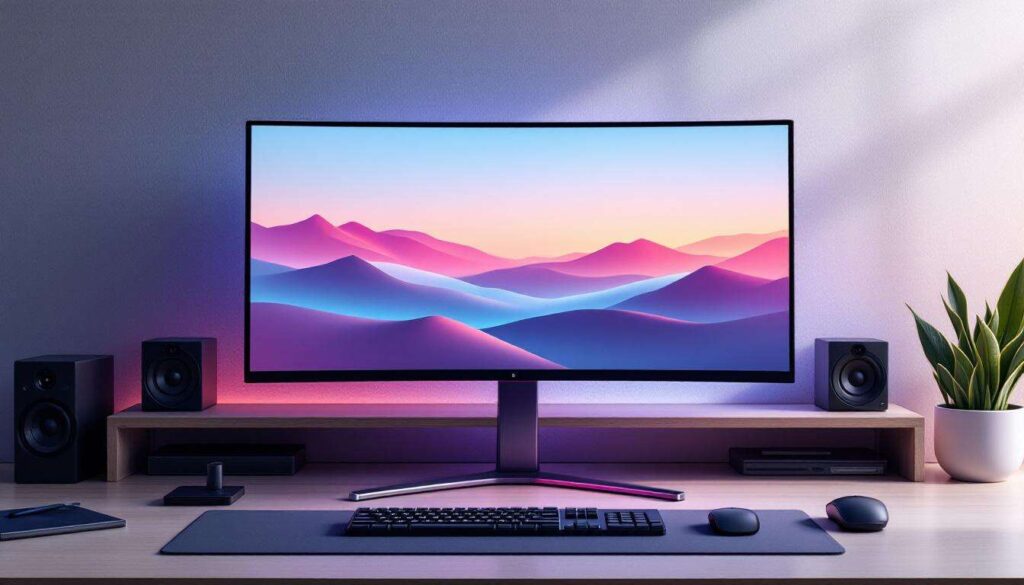
For years, PC enthusiasts have watched with envy as OLED technology transformed the television and smartphone markets, delivering unparalleled contrast ratios and vibrant colours. The wait for this display revolution to reach desktop and laptop computers has been lengthy, marked by technical challenges and cost barriers that kept the technology frustratingly out of reach. Now, the landscape has shifted dramatically. OLED panels have finally arrived on PCs in meaningful numbers, bringing with them the visual excellence that mobile devices have enjoyed for nearly a decade. This long-awaited maturation represents not merely an incremental improvement but a fundamental transformation in how we experience digital content on our primary computing devices.
The OLED technology: an anticipated revolution for PCs
Understanding the core principles behind OLED displays
Organic light-emitting diode technology operates on a fundamentally different principle compared to traditional LCD screens. Each pixel in an OLED panel emits its own light, eliminating the need for a backlight system. This self-emissive nature allows individual pixels to switch off completely, producing true blacks that LCD technology simply cannot replicate. The organic compounds within each pixel respond to electrical current by generating light, creating images with exceptional precision and control.
Why the PC market took so long to embrace OLED
Several technical and economic factors delayed OLED’s arrival on personal computers:
- Manufacturing costs remained prohibitively high for larger display formats
- Burn-in concerns created hesitation amongst manufacturers and consumers alike
- Static interface elements common in desktop operating systems posed unique challenges
- Production yields for larger panels struggled to meet commercial viability thresholds
- Competition from increasingly sophisticated LCD variants reduced urgency
These obstacles have gradually diminished as manufacturing processes matured and economies of scale improved. The technology that once seemed perpetually five years away has finally crossed the threshold into practical implementation, bringing with it the promise that early adopters have anticipated for so long.
Advantages of OLED for PC users
Visual performance that transforms the computing experience
The benefits of OLED technology extend far beyond simple specifications. Infinite contrast ratios create images with depth and dimensionality that LCD panels cannot match. Shadows retain detail whilst highlights shine without blooming into surrounding areas. Colour accuracy reaches new heights, with wider colour gamuts and more precise reproduction across the spectrum. Response times measured in microseconds eliminate motion blur, making fast-paced content appear remarkably smooth.
Practical benefits for different user categories
| User Type | Primary Benefits | Key Applications |
|---|---|---|
| Content Creators | Accurate colour reproduction, deep blacks | Photo editing, video grading, graphic design |
| Gamers | Fast response times, high refresh rates | Competitive gaming, immersive experiences |
| Professionals | Reduced eye strain, better text clarity | Document work, coding, research |
Beyond these category-specific advantages, all users benefit from superior viewing angles and reduced power consumption when displaying darker content. The technology delivers tangible improvements across virtually every aspect of visual computing, making the upgrade compelling for diverse user bases.
Comparison of OLED and LCD screens: what future for the PC ?
Technical specifications reveal stark differences
When placed side by side, OLED and LCD technologies demonstrate fundamental disparities. Contrast ratios illustrate this most dramatically: whilst premium LCD panels might achieve 2000:1 ratios, OLED displays effectively reach infinity due to their ability to display perfect blacks. Colour volume, response times, and viewing angles all favour OLED significantly. However, LCD technology maintains advantages in peak brightness and longevity, particularly for static content display.
Real-world performance considerations
The theoretical advantages translate into observable differences during everyday use. Text appears sharper on OLED screens due to per-pixel illumination control. Dark mode interfaces become genuinely dark rather than merely grey. HDR content displays with the dynamic range that creators intended. These improvements matter not just for entertainment but for productivity applications where visual clarity directly impacts efficiency and comfort.
The question of which technology will dominate depends less on technical superiority and more on how manufacturers address OLED’s remaining limitations whilst maintaining its cost-competitiveness. As production scales and new materials emerge, the balance continues shifting in OLED’s favour.
Recent innovations that have boosted OLED in the PC market
Technological breakthroughs addressing historical concerns
Several key developments have accelerated OLED adoption for PCs. QD-OLED technology combines quantum dots with OLED emitters, dramatically improving brightness and colour accuracy. This hybrid approach addresses one of OLED’s traditional weaknesses whilst maintaining its inherent advantages. Meanwhile, new pixel structures and materials have extended lifespan significantly, with manufacturers now confidently offering warranties comparable to LCD products.
Software and firmware solutions enhancing longevity
Modern OLED monitors incorporate sophisticated protection mechanisms:
- Pixel shift algorithms that subtly move static elements
- Automatic brightness limiters for prolonged static content
- Screen refresh cycles that equalise pixel wear
- Heat management systems preventing accelerated degradation
These innovations work invisibly in the background, preserving image quality without requiring user intervention. Combined with improved organic compounds that resist degradation, these advances have transformed OLED from a risky proposition into a reliable long-term investment for PC users.
Impact of OLED on the PC industry and its users
Market dynamics shifting towards premium displays
The introduction of viable OLED options has restructured the display market. Manufacturers now position these panels as flagship products, commanding premium prices that reflect both technological sophistication and market positioning. This has created a new tier above traditional high-end LCD displays, whilst simultaneously pushing LCD technology to improve in response to OLED’s competitive pressure.
Changing user expectations and purchasing decisions
Once users experience OLED quality, returning to LCD often feels like a downgrade. This phenomenon has created strong customer loyalty amongst early adopters and generated significant word-of-mouth marketing. Professional users increasingly specify OLED displays for colour-critical work, whilst gaming enthusiasts embrace the technology for its responsiveness and visual impact. The technology has matured from curiosity to genuine preference.
Future perspectives: will OLED dominate the PC market ?
Factors supporting widespread OLED adoption
Several trends suggest OLED will capture significant market share. Manufacturing costs continue declining as production volumes increase. New materials promise even better performance and longevity. Consumer awareness grows as more users experience the technology firsthand. The transition mirrors previous display technology shifts, where superior performance eventually overcame initial cost barriers and technical concerns.
Remaining challenges and alternative technologies
However, complete market dominance remains uncertain. MicroLED technology looms on the horizon, potentially offering OLED’s benefits without its drawbacks. LCD manufacturers continue innovating with mini-LED backlighting and improved quantum dot implementations. Price sensitivity in mainstream markets may limit OLED to premium segments for years. The future likely involves coexistence rather than total replacement, with different technologies serving different market segments based on priorities and budgets.
The maturation of OLED technology for PCs represents a significant milestone in display evolution. After years of anticipation, the technology now delivers on its promises with panels that combine stunning visual quality with acceptable longevity and reasonable pricing. Whilst challenges remain and competing technologies continue developing, OLED has undeniably established itself as the premium choice for discerning PC users. The question is no longer whether OLED belongs on PCs, but rather how quickly it will expand beyond early adopters into mainstream computing. The revolution has arrived, and the PC experience will never quite be the same.