



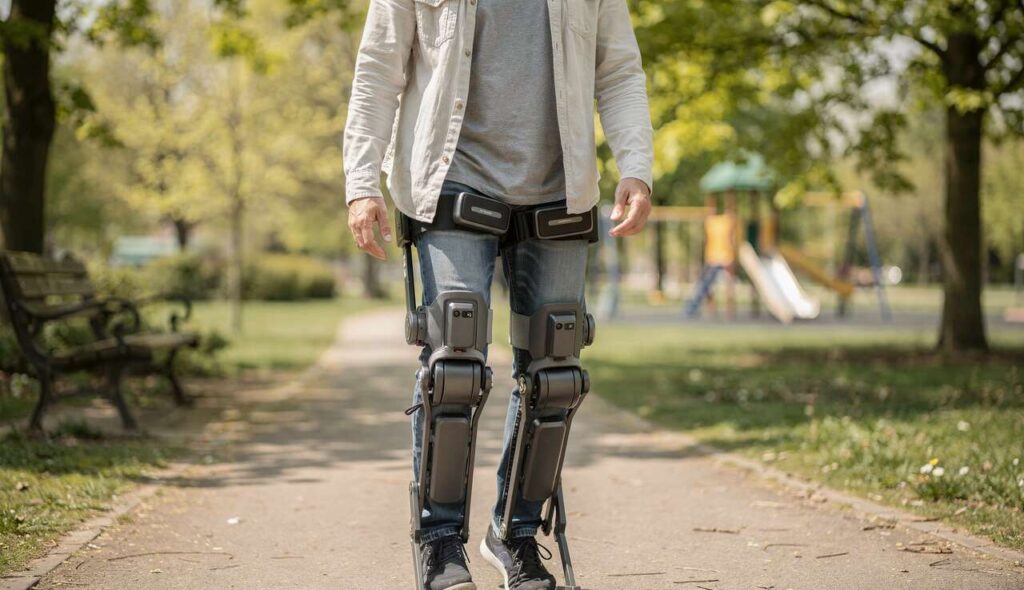
Exoskeletons, once confined to the realm of science fiction and military research laboratories, are becoming increasingly accessible to ordinary people. Advances in materials science, miniaturisation of components, and manufacturing processes have transformed these wearable robotic devices from cumbersome, expensive prototypes into practical tools for everyday use. Industries ranging from healthcare to construction are beginning to adopt these technologies, whilst individuals with mobility impairments are discovering newfound independence. The combination of reduced costs and improved ergonomics is accelerating their integration into mainstream society, marking a significant shift in how we approach physical assistance and human augmentation.
The introduction of exoskeletons: new perspectives
From military origins to civilian applications
The development of exoskeleton technology initially focused on military applications, with defence agencies investing heavily in systems designed to enhance soldiers’ strength and endurance. These early models were prohibitively expensive, often costing hundreds of thousands of pounds, and required substantial power supplies that limited their practicality. However, the knowledge gained from these programmes has trickled down to civilian sectors, where engineers have reimagined the technology for medical rehabilitation, industrial support, and personal mobility assistance.
Technological breakthroughs enabling wider adoption
Several key innovations have made exoskeletons more viable for everyday use:
- Development of lightweight composite materials that reduce overall device weight
- Improved battery technology providing longer operational periods
- Advanced sensors and artificial intelligence for intuitive movement prediction
- Modular designs allowing customisation for specific tasks or body types
- Simplified control systems requiring minimal training
These advancements have collectively addressed the primary barriers that previously prevented widespread adoption. Manufacturers can now produce devices that are both affordable and practical, opening new markets and applications that were previously unimaginable.
As these technological foundations solidify, attention naturally turns to the specific ways these devices are being deployed in real-world settings.
Practical applications of exoskeletons in everyday life
Healthcare and rehabilitation
Medical facilities are increasingly incorporating robotic exoskeletons into rehabilitation programmes for patients recovering from strokes, spinal injuries, and neurological conditions. These devices enable patients to engage in repetitive gait training that would otherwise require multiple therapists, improving outcomes whilst reducing healthcare costs. Some models are now designed for home use, allowing patients to continue therapy outside clinical settings and accelerating recovery timelines.
Industrial and occupational support
Manufacturing plants, warehouses, and construction sites are adopting exoskeletons to reduce workplace injuries and increase productivity. Workers performing repetitive lifting, overhead tasks, or prolonged standing benefit from passive and active support systems that distribute loads more evenly across the body. Companies report significant reductions in musculoskeletal disorders and associated sick leave, making the investment in exoskeleton technology financially justifiable.
| Industry sector | Primary use case | Reported injury reduction |
|---|---|---|
| Automotive manufacturing | Overhead assembly work | 40-50% |
| Logistics and warehousing | Repetitive lifting | 30-45% |
| Construction | Tool support and lifting | 35-55% |
Personal mobility enhancement
For individuals with mobility impairments, personal exoskeletons offer unprecedented independence. Users can navigate environments previously inaccessible to them, participate in social activities, and maintain employment that would otherwise be impossible. These devices are becoming sufficiently refined that users can wear them throughout the day, integrating seamlessly into their daily routines.
Understanding these applications provides context for examining the economic factors driving their proliferation.
Economic advantages of modern exoskeletons
Declining production costs
The cost of exoskeleton systems has dropped dramatically as manufacturing scales up and component prices fall. Devices that once cost £100,000 or more are now available for £10,000 to £30,000, with simpler passive models priced even lower. This reduction stems from several factors:
- Mass production techniques replacing custom fabrication
- Use of commercially available components rather than bespoke parts
- Competition among multiple manufacturers driving innovation and efficiency
- Standardisation of designs reducing development costs
Return on investment for employers
Organisations adopting exoskeleton technology report compelling financial returns. Beyond injury reduction, benefits include increased productivity, reduced insurance premiums, and improved employee retention. Some companies calculate payback periods of less than two years, making exoskeletons an attractive investment compared to traditional ergonomic interventions.
Insurance and healthcare cost savings
Healthcare systems and insurers are beginning to recognise the long-term cost benefits of exoskeleton technology. By preventing injuries and facilitating faster rehabilitation, these devices reduce the burden of chronic conditions and long-term disability payments. Some insurance providers now offer coverage for exoskeletons, acknowledging their role in preventative care and cost containment.
These economic factors are closely intertwined with the technical improvements that make modern exoskeletons practical for extended use.
Lightness and comfort: a technical revolution
Materials science innovations
Modern exoskeletons utilise carbon fibre composites, advanced polymers, and aerospace-grade aluminium alloys that provide strength without excessive weight. Some devices weigh as little as three to five kilograms, compared to earlier models that exceeded twenty kilograms. This dramatic weight reduction makes extended wear feasible and reduces the energy required for operation.
Ergonomic design principles
Contemporary exoskeletons incorporate human-centred design principles that prioritise user comfort and natural movement patterns. Adjustable contact points, breathable padding, and anatomically contoured frames ensure that devices can be worn for full work shifts without causing discomfort or secondary injuries. Designers now collaborate with physiotherapists and occupational health specialists to optimise fit and function.
Power efficiency and battery life
Improvements in battery technology and power management systems enable exoskeletons to operate for eight hours or more on a single charge. Passive exoskeletons, which use springs and mechanical linkages rather than motors, require no power at all whilst still providing significant support. Hybrid designs combine both approaches, using powered assistance only when necessary to maximise battery life.
These technical advancements are reshaping employment landscapes and industrial practices in profound ways.
Impact on the job market and industry
Extending working lives
Exoskeletons enable workers to remain in physically demanding roles longer, potentially extending careers that might otherwise end prematurely due to physical deterioration. This has significant implications for ageing workforces in developed economies, where experienced workers represent valuable institutional knowledge. By reducing physical strain, these devices help retain skilled employees whilst maintaining productivity.
Workforce inclusion and accessibility
The availability of assistive exoskeletons is expanding employment opportunities for individuals with disabilities or physical limitations. Jobs previously considered unsuitable for people with mobility impairments are becoming accessible, promoting workforce diversity and inclusion. This shift challenges traditional assumptions about physical capability and job suitability.
Changing skill requirements
As exoskeletons become commonplace, workers need training in their operation, maintenance, and safety protocols. This creates new roles for technicians and specialists whilst requiring existing workers to develop additional competencies. Some industries are incorporating exoskeleton training into standard onboarding processes, recognising these devices as essential workplace equipment.
Productivity and competitive advantage
Companies adopting exoskeleton technology often gain competitive advantages through increased output, improved quality, and reduced labour costs associated with injuries and turnover. This creates pressure on competitors to adopt similar technologies, potentially accelerating industry-wide transformation.
Despite these promising developments, significant challenges remain that must be addressed for exoskeletons to achieve their full potential.
The technical and ethical challenges of exoskeletons
Regulatory frameworks and standards
The rapid development of exoskeleton technology has outpaced regulatory frameworks in many jurisdictions. Questions remain about safety certification, liability in case of device failure, and standards for manufacturing quality. Regulators are working to establish guidelines that protect users without stifling innovation, but this process takes time and coordination across multiple agencies and countries.
Privacy and data security concerns
Many modern exoskeletons collect data about user movements, performance metrics, and physiological parameters. This raises concerns about privacy, data ownership, and potential misuse by employers or insurers. Clear policies regarding data collection, storage, and usage are essential to maintain user trust and prevent exploitation.
Equity and access issues
Despite falling prices, exoskeletons remain expensive for many individuals and small organisations. This creates potential disparities where larger companies and wealthier individuals benefit whilst others are excluded. Addressing these equity concerns requires policy interventions such as subsidies, insurance coverage, or public provision schemes.
Long-term health implications
Questions persist about the long-term effects of regular exoskeleton use on musculoskeletal development and natural strength maintenance. Some researchers worry that reliance on assistive devices might lead to muscle atrophy or altered movement patterns. Ongoing studies are necessary to understand these potential consequences and develop usage guidelines that maximise benefits whilst minimising risks.
Exoskeleton technology represents a significant advancement in human augmentation, offering tangible benefits across healthcare, industry, and personal mobility. The convergence of reduced costs, improved ergonomics, and practical applications is driving adoption beyond specialised niches into mainstream use. However, realising the full potential of these devices requires addressing regulatory gaps, ethical concerns, and accessibility barriers. As technology continues to evolve and society adapts to these new capabilities, exoskeletons are poised to become an increasingly common feature of everyday life, fundamentally changing how we approach physical work, rehabilitation, and human capability.