



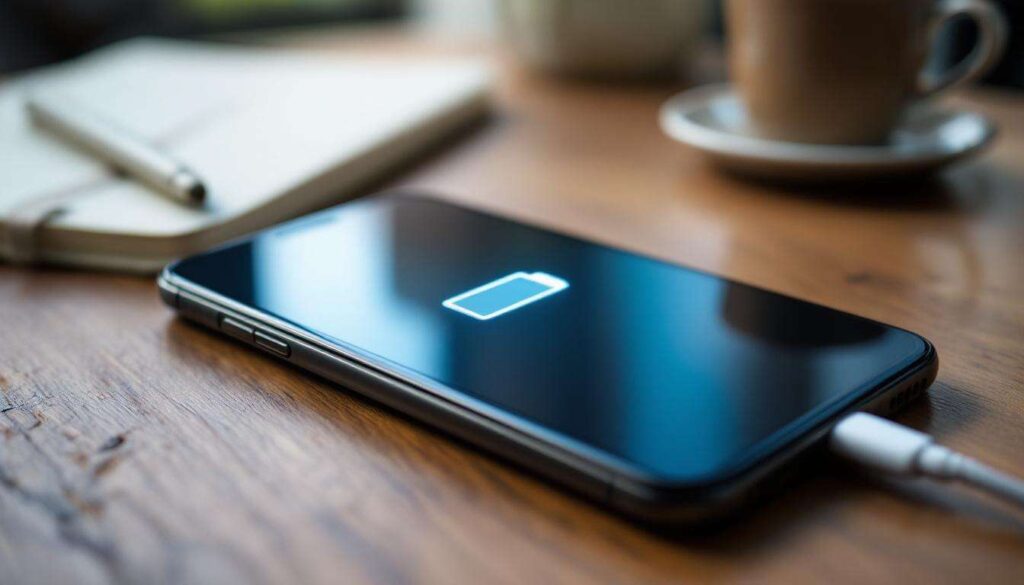
Your smartphone battery degrades faster than it should, and the culprit might be a charging habit you practise daily without realising the damage. Modern lithium-ion batteries are remarkably sophisticated, yet they remain vulnerable to common mistakes that accelerate their deterioration. Understanding how charging behaviours affect battery chemistry can add years to your device’s functional lifespan and save you from premature replacements.
Impact of overheating on the battery
How heat damages battery chemistry
Excessive temperatures represent the most destructive force affecting lithium-ion batteries. When your phone heats up during charging, the elevated temperature accelerates chemical reactions within the battery cells, causing irreversible structural changes to the electrolyte and electrode materials. This degradation manifests as reduced capacity, meaning your battery holds less charge over time.
The optimal operating temperature for smartphone batteries ranges between 16°C and 22°C. Beyond 35°C, degradation accelerates exponentially. Consider these temperature-related consequences:
- Lithium plating on the anode, which permanently reduces capacity
- Electrolyte decomposition, creating resistance within the battery
- Separator membrane damage, increasing short-circuit risks
- Accelerated calendar ageing, even when the phone sits unused
Common heat-generating scenarios
Several everyday situations create dangerous heat levels during charging. Charging whilst running resource-intensive applications simultaneously generates heat from both the processor and the charging circuitry. Placing your phone on soft surfaces like beds or sofas traps heat, preventing natural dissipation.
| Scenario | Temperature increase | Damage risk |
|---|---|---|
| Standard charging | 5-10°C above ambient | Low |
| Fast charging whilst gaming | 15-25°C above ambient | High |
| Charging in direct sunlight | 20-30°C above ambient | Very high |
| Charging under pillow | 15-20°C above ambient | High |
Understanding these thermal dynamics naturally leads to examining another widespread charging practice that compounds these risks.
Precautions when charging overnight
The trickle charge problem
Leaving your phone plugged in throughout the night seems convenient, but this practice subjects your battery to prolonged stress at maximum capacity. Once your phone reaches 100%, it doesn’t simply stop charging. Instead, it enters a trickle charge cycle, where the charger repeatedly tops up the battery as it naturally discharges slightly.
This constant cycling between 99% and 100% keeps the battery at high voltage for extended periods, accelerating chemical degradation. Additionally, the charging circuitry remains active, generating unnecessary heat that further compounds the damage.
Safer overnight charging strategies
If overnight charging remains necessary for your routine, implement these protective measures:
- Enable optimised battery charging features that delay full charge until morning
- Use a standard charger rather than fast-charging adapters overnight
- Remove phone cases to improve heat dissipation
- Place the phone on hard, cool surfaces away from flammable materials
- Consider smart plugs with timers to cut power after sufficient charging time
The equipment you use for charging plays an equally critical role in battery preservation.
The importance of using suitable accessories
Why charger quality matters
Counterfeit and substandard charging accessories pose significant risks to battery health. Genuine chargers incorporate sophisticated circuitry that regulates voltage and current precisely, adapting to your battery’s needs throughout the charging cycle. Cheap alternatives lack these protections, delivering inconsistent power that stresses battery cells.
Authentic chargers communicate with your phone’s battery management system, adjusting charging parameters based on temperature, current charge level, and battery condition. This intelligent dialogue prevents overcharging, manages heat generation, and optimises charging speed for minimal degradation.
Cable specifications and their impact
The charging cable represents more than a simple connector. Quality cables maintain proper resistance levels, ensuring efficient power transfer without excessive heat generation. Damaged or poorly manufactured cables create resistance hotspots, generating heat and delivering unstable current.
| Cable type | Power delivery | Longevity impact |
|---|---|---|
| Original manufacturer cable | Optimal, regulated | Maximum battery lifespan |
| Certified third-party cable | Good, mostly regulated | Good battery lifespan |
| Uncertified budget cable | Inconsistent, unregulated | Reduced battery lifespan |
| Damaged cable | Unstable, dangerous | Severe degradation risk |
Beyond equipment considerations, timing your disconnection properly significantly influences battery longevity.
When should you disconnect your phone ?
The optimal charge range
Battery researchers consistently recommend maintaining charge levels between 20% and 80% for maximum longevity. This range minimises stress on battery chemistry at both extremes. Charging to 100% increases voltage stress, whilst depleting below 20% forces deeper discharge cycles that strain the battery structure.
Lithium-ion batteries experience less degradation from partial charge cycles than from full cycles. Charging from 40% to 70% causes significantly less wear than charging from 10% to 100%, even though the latter provides more usable capacity.
Recognising charging completion
Modern smartphones provide visual and audible indicators when charging completes, yet many users ignore these signals. Disconnecting promptly after reaching your target charge level prevents unnecessary exposure to high voltage states. Consider these practical approaches:
- Set charge limit alerts if your phone supports this feature
- Charge during activities when you can monitor progress
- Use automation apps to alert you at specific charge percentages
- Develop a routine of charging in shorter, more frequent sessions
Your phone’s software plays a surprisingly substantial role in managing these charging dynamics effectively.
Software updates and their role
Battery management improvements
Manufacturers continuously refine battery management algorithms through software updates. These improvements optimise charging patterns based on accumulated usage data, learning your daily routines to minimise battery stress. Recent updates often include features that delay charging to 100% until just before you typically unplug your phone.
Updates also address bugs that cause excessive background activity, reducing unnecessary battery drain that leads to more frequent charging cycles. Security patches prevent malicious software from hijacking system resources, which can generate heat and accelerate battery degradation.
Calibration and monitoring tools
Software updates enhance the accuracy of battery health monitoring, providing more reliable information about your battery’s actual condition. This data helps you make informed decisions about charging habits and replacement timing. Some updates introduce advanced diagnostics that identify specific degradation patterns.
These software-level protections work best when combined with conscious optimisation strategies.
Optimising your battery lifespan
Daily habits that preserve capacity
Implementing consistent protective practices dramatically extends battery lifespan. Beyond charging considerations, overall phone usage patterns significantly impact battery health. Reducing screen brightness, limiting background app refresh, and disabling unnecessary location services decrease the frequency of charging cycles required.
- Activate battery saver modes when charge drops below 30%
- Avoid extreme temperature exposure, both hot and cold
- Remove processor-intensive apps you rarely use
- Disable push notifications for non-essential applications
- Use Wi-Fi instead of mobile data when possible
Long-term storage considerations
If storing a phone for extended periods, maintain charge levels around 50% to 60%. This mid-range charge minimises degradation during inactivity. Completely draining or fully charging before storage accelerates calendar ageing, permanently reducing capacity even without use.
| Storage duration | Recommended charge level | Check frequency |
|---|---|---|
| 1-4 weeks | 40-60% | Not required |
| 1-3 months | 50% | Monthly |
| 3-6 months | 50-60% | Every 6 weeks |
| Beyond 6 months | 50% | Monthly recharge |
Battery preservation ultimately requires a holistic approach combining proper charging techniques, quality accessories, software maintenance, and mindful usage patterns. The cumulative effect of small daily decisions determines whether your battery maintains robust performance for years or deteriorates rapidly within months. Avoiding extreme charge levels, managing heat exposure, and disconnecting promptly after charging represent simple yet profoundly effective strategies. Your phone’s battery lifespan depends less on sophisticated technology and more on consistent application of these fundamental principles.