



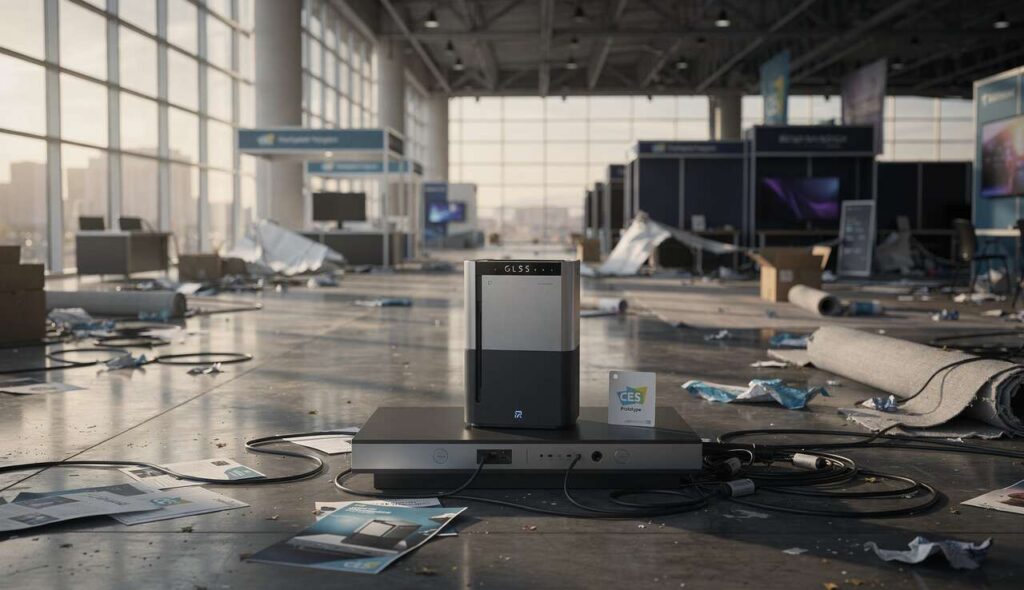
Every January, the tech world converges on Las Vegas for the Consumer Electronics Show, where thousands of companies unveil groundbreaking products that promise to revolutionise our daily lives. From artificial intelligence assistants to revolutionary health devices, the exhibition floor buzzes with innovation and ambition. Yet the crucial question remains: what becomes of these spectacular announcements once the lights dim and the crowds disperse ? The journey from trade show sensation to commercial reality proves far more complex than the polished presentations suggest, with only a fraction of showcased innovations ultimately reaching consumers’ hands.
The assessment after CES Las Vegas: which innovations stand out ?
The most memorable product categories
Each edition of CES produces a handful of standout innovations that capture media attention and industry imagination. Artificial intelligence integration has dominated recent shows, with smart home devices, autonomous vehicles, and health monitoring systems leading the charge. Wearable technology continues to evolve beyond simple fitness trackers, now incorporating advanced biometric sensors capable of detecting early signs of illness.
- Advanced robotics for domestic and commercial applications
- Next-generation display technologies including transparent and flexible screens
- Sustainable tech solutions addressing environmental concerns
- Immersive reality experiences combining virtual and augmented elements
- Revolutionary mobility concepts from electric vehicles to personal transport devices
Award-winning innovations and their significance
The CES Innovation Awards programme highlights products demonstrating exceptional engineering and design. These accolades serve as important markers of quality and potential, though they don’t guarantee commercial success. Recent winners have included breakthrough medical devices, accessibility technologies, and energy-efficient solutions that address pressing global challenges. The recognition provides valuable credibility, particularly for startups competing against established brands.
| Category | Market Impact | Success Rate |
|---|---|---|
| Health Tech | High consumer demand | 65% |
| Smart Home | Steady growth | 58% |
| Mobility | Regulatory challenges | 42% |
| Sustainability | Emerging interest | 51% |
Understanding which innovations gain traction provides essential context for examining how these products navigate the complex path from exhibition stand to retail shelf.
How do CES innovations evolve in the market ?
The product development timeline
Many CES exhibits represent prototypes or concept devices rather than finished products ready for immediate purchase. The development timeline typically extends twelve to eighteen months beyond the show, during which companies refine designs, conduct safety testing, and secure necessary certifications. Manufacturing partnerships must be established, supply chains organised, and distribution networks negotiated before products reach consumers.
Market testing and consumer feedback
Following CES exposure, companies often conduct limited market releases to gauge genuine consumer interest beyond the trade show hype. This crucial validation phase reveals whether the innovation addresses real needs or merely generates temporary excitement. Feedback from early adopters influences final specifications, pricing strategies, and marketing approaches. Products may undergo significant modifications based on these insights, with some features enhanced whilst others are simplified or removed entirely.
- Beta testing programmes with selected consumer groups
- Regional launches in specific markets before global rollout
- Iterative improvements based on user experience data
- Price point adjustments reflecting production realities
This evolutionary process determines whether innovations can successfully transition from controlled exhibition environments to the unpredictable demands of everyday consumer use.
The challenges of post-CES commercialisation
Manufacturing and scaling difficulties
Producing a handful of demonstration units differs dramatically from mass manufacturing thousands or millions of products. Companies frequently encounter unexpected technical obstacles when scaling production, from component shortages to quality control issues. Cost management becomes critical as the price of materials, labour, and logistics can rapidly erode profit margins anticipated during the development phase.
Regulatory and certification requirements
Innovative products often face stringent regulatory scrutiny, particularly in health, automotive, and consumer electronics sectors. Obtaining necessary certifications from bodies such as the FCC, CE, or FDA can delay launches significantly. Compliance costs sometimes prove prohibitive for smaller companies, forcing them to modify designs or abandon certain markets entirely. Privacy concerns and data protection regulations add further complexity for connected devices.
Market saturation and competition
The window between CES announcement and product availability allows competitors to respond with similar or superior offerings. Established brands possess resources to accelerate development and leverage existing distribution channels, potentially overshadowing innovative startups. Consumer attention spans prove remarkably short, and the excitement generated at CES dissipates quickly without sustained marketing efforts and tangible product availability.
These formidable obstacles explain why securing financial backing and strategic partnerships becomes essential for transforming exhibition success into commercial viability.
The role of investors and partners after the show
Venture capital interest and funding rounds
CES serves as a powerful platform for attracting investment, with venture capitalists actively scouting the show for promising opportunities. The visibility gained often triggers funding discussions, though converting interest into actual capital requires detailed business plans and realistic projections. Post-show momentum can lead to successful funding rounds, providing resources necessary for product refinement and market entry.
Strategic partnerships and collaborations
Beyond financial investment, strategic partnerships with established companies offer crucial advantages including manufacturing expertise, distribution networks, and brand credibility. Technology giants frequently scout CES for acquisition targets or collaboration opportunities that complement their existing portfolios. These relationships can accelerate time-to-market whilst providing smaller innovators with resources they couldn’t access independently.
- Distribution agreements with major retailers
- Technology licensing arrangements
- Joint development initiatives combining complementary expertise
- Marketing partnerships leveraging established brand recognition
The support ecosystem that forms after CES often determines whether innovations achieve their full potential or fade into obscurity, ultimately shaping broader technological developments.
The impact of CES innovations on technological trends
Setting industry standards and expectations
CES innovations collectively signal emerging technological directions that influence industry roadmaps and consumer expectations. When multiple companies showcase similar concepts, it validates market potential and encourages broader adoption. These patterns help establish informal standards and best practices that guide subsequent development across the sector.
Influencing competitor strategies
The visibility of CES announcements forces competitors to reassess their own development priorities and accelerate initiatives in response to perceived threats or opportunities. This competitive dynamic drives innovation beyond the exhibiting companies themselves, creating ripple effects throughout entire industries. Product categories that generate significant CES buzz often see increased investment and development activity in subsequent months.
Shaping consumer demand and awareness
Media coverage of CES innovations educates consumers about emerging possibilities, creating demand for features and capabilities they hadn’t previously considered. This awareness-building function proves particularly valuable for entirely new product categories, helping overcome the natural resistance to unfamiliar technologies. Consumer expectations established at CES influence purchasing decisions long after the show concludes.
These broader impacts extend beyond individual products to shape the trajectory of technological advancement and market evolution.
Towards sustainable success or just a passing fad ?
Distinguishing genuine innovation from marketing hype
Not every CES sensation represents meaningful progress. Distinguishing substantive innovations from clever marketing requires examining whether products address genuine needs, offer practical advantages over existing solutions, and demonstrate technical feasibility. Sustainable innovations typically solve real problems rather than creating artificial demand through novelty alone.
Long-term market viability indicators
Several factors predict whether CES innovations achieve lasting success:
- Clear value proposition with measurable benefits
- Realistic pricing aligned with target market expectations
- Robust business model supporting ongoing development
- Adaptability to evolving market conditions and consumer preferences
- Strong intellectual property protection
- Committed leadership team with relevant experience
Products meeting these criteria stand significantly better chances of transitioning from trade show novelties to established market offerings with enduring commercial viability.
The journey from CES exhibition to commercial success proves challenging, with numerous innovations failing to reach consumers despite initial excitement. Those that succeed typically combine genuine technological advancement with sound business execution, adequate funding, and strategic partnerships. The show’s true value extends beyond individual product launches to its role in shaping industry trends, fostering collaboration, and educating markets about emerging possibilities. Understanding this complex ecosystem reveals that CES innovations represent starting points rather than conclusions, with their ultimate impact determined by execution quality and market readiness during the crucial months following the show’s conclusion.