



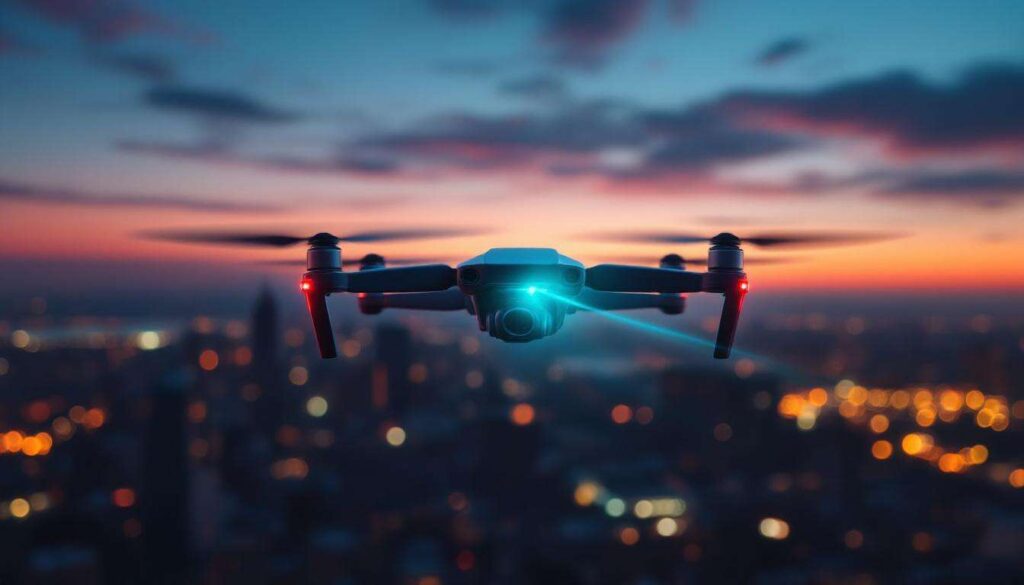
Engineers have successfully developed a groundbreaking wireless power system capable of charging drones whilst they remain airborne, potentially revolutionising the operational capabilities of unmanned aerial vehicles. This laser-based technology, created by PowerLight Technologies, transmits energy from ground stations directly to flying drones, eliminating the traditional constraints imposed by battery limitations. The innovation marks a pivotal moment in aerospace engineering, offering a glimpse into a future where drones could operate continuously without requiring physical landing for recharging purposes.
The advent of infinite flight drones
Breaking battery limitations
The concept of infinite flight represents a fundamental shift in how unmanned aerial systems operate. Traditional drones face significant operational restrictions due to battery capacity, typically limiting flight duration to between 20 and 40 minutes depending on the model and payload. This new wireless charging system addresses this constraint by enabling continuous energy replenishment during flight operations.
The technology offers several immediate advantages:
- Extended mission duration without physical landing requirements
- Increased operational efficiency for surveillance and monitoring tasks
- Enhanced capability for emergency response scenarios
- Reduced downtime between consecutive missions
Operational implications
The military sector stands to benefit substantially from this advancement. Current systems, such as the Raven RQ-11B drone used by armed forces, operate within restricted altitude ranges of 46 to 305 metres. The new technology extends operational parameters considerably, allowing drones to function at altitudes up to 1,500 metres whilst maintaining power supply connectivity. This expansion of the operational envelope provides tactical advantages in reconnaissance, surveillance, and target acquisition missions.
This breakthrough in power delivery systems naturally leads to questions about the underlying technology that makes such capabilities possible.
Laser technology for wireless power supply
System architecture and functionality
The wireless charging system operates through a sophisticated arrangement of ground-based transmitters and airborne receivers. A ground station emits concentrated laser beams towards a specially designed receiver mounted on the drone. This receiver incorporates a laser energy converter that transforms the incoming optical energy into electrical power, which then charges the drone’s battery system or directly powers its motors.
| Component | Specification |
|---|---|
| Power transmission capacity | Several kilowatts (kW) |
| Effective operational range | Up to 1,500 metres |
| Maximum operational altitude | 1,500 metres (5,000 feet) |
| Conventional lab laser output | Milliwatts (mW) |
Tracking and precision control
The system employs advanced software algorithms that enable the ground transmitter to lock onto and continuously track cooperating targets. This tracking capability ensures that the laser beam remains accurately directed at the drone’s receiver even as the aircraft manoeuvres through three-dimensional space. Ground operators can monitor battery status in real-time and adjust energy transmission parameters accordingly, creating what engineers describe as a smart energy network capability.
Whilst the technological achievement is remarkable, implementing such a system in real-world conditions presents numerous engineering obstacles.
Technical challenges and innovative solutions
Atmospheric interference and beam integrity
Transmitting high-power laser beams through the atmosphere introduces several complications. Weather conditions, particularly fog, rain, and atmospheric turbulence, can scatter or absorb laser energy, reducing transmission efficiency. Engineers have addressed these concerns through adaptive optics systems that compensate for atmospheric distortion and sophisticated beam-shaping technologies that maintain energy density over extended distances.
Safety protocols and regulatory considerations
The deployment of kilowatt-level laser systems raises legitimate safety concerns. The technology requires comprehensive safeguards to prevent accidental exposure to personnel, wildlife, or aircraft. Solutions include:
- Automated shutdown systems that deactivate transmission when unauthorised objects enter the beam path
- Restricted operational zones with clearly defined boundaries
- Integration with air traffic control systems for civilian applications
- Fail-safe mechanisms that terminate power transmission upon loss of target lock
Energy conversion efficiency
Converting laser energy into usable electrical power involves inherent efficiency losses. The photovoltaic cells used in the receiver must be optimised for the specific wavelength of the transmitted laser whilst maintaining durability under continuous high-power exposure. Current systems achieve conversion efficiencies sufficient for practical application, though ongoing research aims to improve these figures further.
These technical solutions pave the way for transformative changes across multiple sectors that rely on drone technology.
Potential impact on the drone industry
Military and defence applications
The defence sector represents the most immediate beneficiary of infinite flight capability. Persistent surveillance missions, which currently require multiple drone rotations, could be conducted by single aircraft operating continuously. According to industry experts, this technology enables drones to engage multiple targets without returning to base for recharging, fundamentally altering mission planning and execution strategies.
Commercial and civilian opportunities
Beyond military applications, numerous commercial sectors could leverage this technology:
- Infrastructure inspection for power lines, pipelines, and telecommunications networks
- Agricultural monitoring and precision farming applications
- Emergency services including search and rescue operations
- Environmental monitoring and wildlife conservation efforts
- Border security and maritime surveillance
The logistics and delivery industry could also benefit substantially, with drones capable of completing multiple delivery runs without interruption for recharging, significantly improving operational economics.
As with any transformative technology, the environmental implications warrant careful consideration.
Environmental consequences and sustainability
Energy consumption considerations
Whilst wireless charging eliminates the need for frequent battery swaps, the overall energy efficiency of the system requires examination. Ground-based laser transmitters consume substantial electrical power, and the conversion process involves energy losses. The environmental benefit depends largely on the source of electricity powering the ground stations. Integration with renewable energy sources such as solar or wind power could enhance the sustainability profile considerably.
Reduced material waste
Extended operational lifespans for drone batteries represent a tangible environmental benefit. Traditional battery systems degrade through repeated charge-discharge cycles, necessitating replacement. Continuous wireless charging could reduce the frequency of battery replacements, thereby decreasing electronic waste and the environmental impact associated with battery manufacturing and disposal.
Looking ahead, several technological trajectories could further enhance this innovation.
Future prospects and technological developments
Scaling and miniaturisation
Current research focuses on adapting the technology for various drone sizes and applications. Miniaturisation efforts aim to create receiver systems light enough for smaller consumer drones, whilst scaling initiatives seek to develop higher-power transmitters capable of supporting larger unmanned aerial vehicles, including cargo drones and potentially manned aircraft.
Network integration and autonomous operations
Future developments may incorporate multiple ground stations creating overlapping coverage zones, allowing drones to transition seamlessly between power sources. Combined with artificial intelligence and autonomous navigation systems, this could enable fully independent drone operations requiring minimal human oversight. Such networks could support drone swarms working cooperatively on complex tasks.
Alternative power transmission methods
Researchers continue exploring complementary technologies, including microwave-based power transmission and hybrid systems combining multiple energy transfer methods. These alternatives could address some limitations of laser-based systems, particularly regarding atmospheric interference and safety concerns in populated areas.
The development of laser-based wireless charging systems represents a significant milestone in unmanned aerial vehicle technology. By eliminating battery constraints that have historically limited drone operations, this innovation opens possibilities across military, commercial, and civilian sectors. Whilst technical challenges remain regarding atmospheric interference, safety protocols, and energy efficiency, the solutions implemented demonstrate the feasibility of continuous airborne power delivery. The technology’s ultimate impact will depend on successful integration with existing infrastructure, regulatory frameworks, and continued refinement of system components. As development progresses and costs decrease, infinite flight capability may transition from specialised military applications to widespread commercial adoption, fundamentally reshaping how society utilises unmanned aerial systems for diverse purposes.