



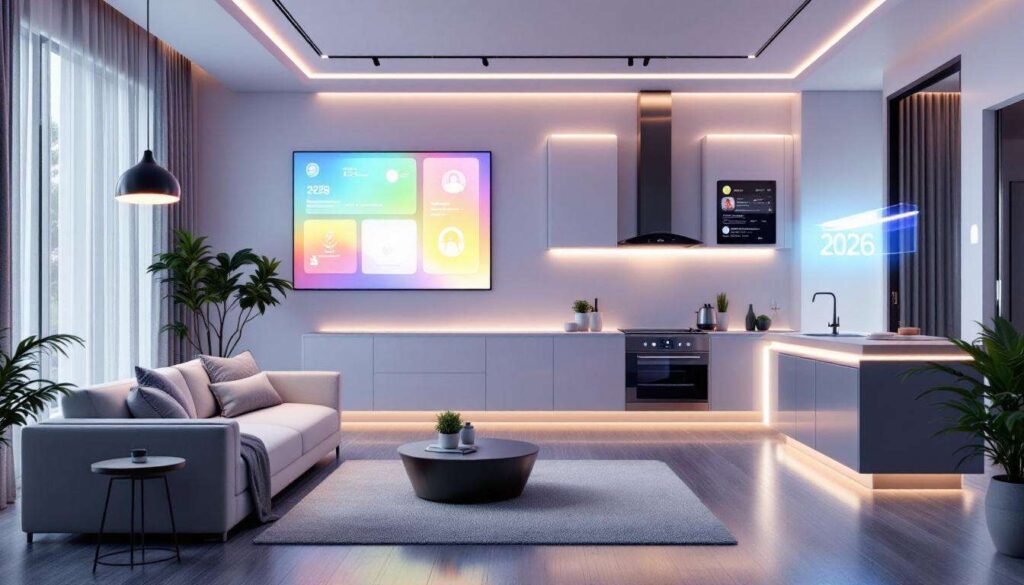
Smart home technology has rapidly evolved from a futuristic concept to an everyday reality for millions of households. The devices that once seemed like luxury additions are now becoming integral components of modern living. As manufacturers continue to innovate and refine their offerings, the landscape of connected homes is poised for remarkable advancements. The coming period promises to bring substantial improvements in how these devices communicate, learn from user behaviour, and integrate into daily routines. Understanding these developments will help homeowners make informed decisions about their technology investments and prepare for a more connected future.
Evolution of smart devices in 2026
Enhanced device capabilities
The next generation of smart home gadgets will demonstrate significant improvements in both functionality and design. Manufacturers are focusing on creating devices that not only perform their primary functions but also contribute to a more cohesive smart home ecosystem. These advancements reflect a maturation of the industry, moving beyond novelty features towards practical, everyday applications that genuinely enhance quality of life.
Key developments in device evolution include:
- Sensors with greater accuracy and responsiveness
- Longer battery life for wireless devices
- More intuitive user interfaces
- Reduced physical footprints with sleeker designs
- Enhanced durability and weather resistance for outdoor applications
Focus on energy efficiency
Energy consumption remains a critical consideration for both manufacturers and consumers. The latest smart devices incorporate advanced power management systems that can reduce household energy costs substantially. Intelligent energy systems will analyse consumption patterns and make automatic adjustments, potentially delivering savings of 25 to 40 per cent without requiring constant user input. This represents a fundamental shift towards autonomous energy optimisation that benefits both household budgets and environmental sustainability.
These improvements in device capabilities and energy efficiency naturally lead to questions about how different brands and systems will work together in increasingly complex home environments.
Advanced interoperability and connectivity
Breaking down compatibility barriers
One of the most significant challenges in smart home adoption has been the fragmentation of ecosystems. Devices from different manufacturers often struggle to communicate effectively, forcing consumers to commit to single brands or invest in multiple control systems. The upcoming period will see substantial progress in addressing these compatibility issues, with devices becoming more capable of working together regardless of manufacturer.
The introduction of products like the Aqara U400 smart lock demonstrates this trend towards universal compatibility. This device utilises ultra-wideband technology, allowing users to unlock doors simply by approaching with their compatible devices. Such innovations represent a move towards seamless integration that prioritises user convenience over proprietary restrictions.
Wireless technology advancements
| Technology | Benefit | Application |
|---|---|---|
| Ultra-wideband (UWB) | Precise positioning | Proximity-based unlocking |
| Wi-Fi 6E | Higher bandwidth | Multiple device support |
| Thread protocol | Low power consumption | Sensor networks |
| Matter standard | Cross-platform compatibility | Universal device control |
These connectivity improvements ensure that smart devices can communicate more reliably and efficiently, creating a foundation for more sophisticated automated behaviours. As devices become better at talking to each other, the role of intelligent systems in managing these interactions becomes increasingly important.
Growing role of artificial intelligence
Learning from user behaviour
Artificial intelligence is transforming smart homes from reactive systems to proactive assistants that anticipate needs and preferences. Rather than requiring manual programming for every scenario, AI-powered devices observe patterns in household activities and adapt their behaviour accordingly. This learning capability means that smart homes become more personalised and efficient over time, requiring less intervention from residents.
Practical applications of AI in smart homes include:
- Lighting systems that adjust based on time of day and occupancy patterns
- Heating and cooling that anticipates schedule changes
- Security systems that distinguish between household members and visitors
- Entertainment systems that suggest content based on viewing habits
- Kitchen appliances that prepare for meal times based on routine
Automated daily routines
The integration of AI enables sophisticated automation that enhances daily living without constant user input. Presence sensors can gently illuminate kitchen spaces when someone enters during early morning hours. Motorised curtains can open to admit natural light at wake-up time, whilst coffee machines begin brewing before residents leave their bedrooms. These seemingly small conveniences accumulate to create a living environment that feels responsive and intuitive.
As artificial intelligence becomes more embedded in individual devices, the need for effective coordination between these intelligent systems becomes apparent, pointing towards centralised management solutions.
New hubs for centralised management
Unified control systems
Managing numerous smart devices through separate applications can become cumbersome and counterproductive. The development of advanced control hubs addresses this challenge by providing a single interface for monitoring and adjusting all connected devices. These hubs serve as the command centre for the smart home, offering a comprehensive view of system status and enabling coordinated actions across multiple devices.
Modern hubs offer several advantages:
- Single-point control for all compatible devices
- Customisable dashboards showing relevant information
- Scene creation combining multiple device actions
- Remote access from anywhere with internet connectivity
- Voice control integration for hands-free operation
Enhanced security features
Centralised hubs also provide improved security through unified monitoring and control. Rather than managing security protocols for each device individually, hubs can implement comprehensive security measures across the entire network. This includes encrypted communications, regular security updates, and anomaly detection that identifies unusual device behaviour that might indicate security threats.
Beyond the core technologies and management systems, broader trends are shaping how smart home devices will develop and be adopted by consumers.
Emerging trends in connected devices
Expanding device categories
The range of available smart devices continues to grow, extending beyond traditional categories like lighting and thermostats. Manufacturers are introducing connected versions of increasingly diverse household items, from kitchen appliances to garden equipment. This expansion reflects growing consumer acceptance of smart technology and manufacturers’ confidence in the viability of connected products across multiple market segments.
Affordability and accessibility
As production scales increase and technology matures, smart devices are becoming more financially accessible to broader audiences. Products that were once premium offerings are now available at mid-range price points, whilst entry-level options provide basic smart functionality at minimal cost. This democratisation of smart home technology is accelerating adoption rates and normalising connected devices as standard household items rather than luxury additions.
Understanding these trends provides context for making practical decisions about incorporating smart technology into homes.
Considerations for adopting smart home technologies
Assessing household needs
Before investing in smart home devices, it is essential to evaluate specific requirements and priorities. Not every household will benefit equally from all available technologies. Factors such as home size, number of occupants, daily routines, and existing infrastructure all influence which devices will provide the most value. A thoughtful assessment prevents unnecessary purchases and ensures that chosen technologies genuinely enhance daily living.
Implementation strategy
Successful smart home adoption typically follows a gradual approach rather than attempting comprehensive installation immediately. Starting with high-impact devices in key areas allows users to become familiar with the technology whilst demonstrating tangible benefits. This phased implementation also spreads costs over time and enables learning from initial experiences before expanding the system.
Recommended implementation priorities:
- Security devices for peace of mind
- Lighting controls for convenience and energy savings
- Climate control for comfort and efficiency
- Entertainment systems for enhanced enjoyment
- Specialised devices based on individual preferences
The transformation of smart home technology represents a significant shift in how we interact with our living spaces. Improved interoperability ensures devices work together seamlessly regardless of manufacturer, whilst artificial intelligence enables systems to learn from behaviour and anticipate needs. Centralised management hubs provide unified control over increasingly complex networks of connected devices. As these technologies become more affordable and accessible, they transition from luxury items to practical enhancements that improve security, comfort, and efficiency. The developments ahead promise to make smart homes not merely more capable, but genuinely intuitive environments that adapt to the rhythms of daily life.